Bandung –
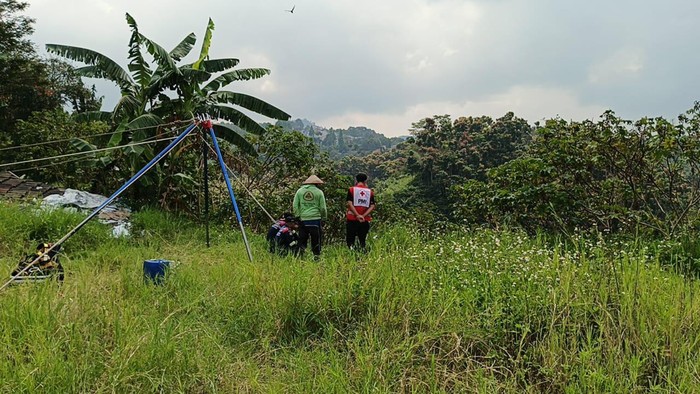
The body of a woman was found in a horrifying condition on a slope at Jalan Setiabudi Indah No. 33, Ledeng Village, Cidadap District, Bandung City, on Saturday (18/4) evening around 9:56 PM local time. The discovery shocked local residents, given that the victim’s location was in a fairly steep and hard-to-reach area.
The evacuation process for the body could not be carried out directly at night due to the dangerous terrain conditions. The Rescue Team from the Bandung City Fire and Rescue Service (Disdamkarmatan) only succeeded in evacuating the victim on Sunday (19/4) afternoon. After evacuation, the body was immediately taken to Sartika Asih Hospital, Bandung City, for further handling.
The Cidadap Police Sector Chief confirmed the discovery of the body. However, the victim’s identity could not yet be confirmed due to the severely decomposed condition of the body.
“There is none yet (regarding identity),” he said when confirmed via text message on Monday (20/4/2026).
He added that the condition of the body, which was mostly destroyed, complicated the identification process.
“The body is mostly destroyed, difficult to identify,” he added.
Around the discovery location, officers also found several items belonging to the victim, such as clothes and a bag. However, their condition was also damaged and destroyed.
“Next to the body, there were clothes and a bag that were also destroyed,” he said.
The police urged residents who feel they have lost a family member to immediately report to the Cidadap Police Sector so that data matching with the hospital can be carried out.
“Yes, if anyone feels they have lost a family member, come to the Police Sector so it can be coordinated with Sartika Asih Hospital,” he said.
Meanwhile, the Head of Rescue at the Bandung City Fire and Rescue Service explained that the evacuation process experienced delays due to safety factors. The body’s location was at the bottom of a slope with conditions that were quite risky for officers.
“The body was buried under bamboo tree roots at a depth of 200 meters,” said the Head of Rescue.
The discovery of the body began with a report from a resident who was active around the incident location. A resident who was training their pet dog suspected something among the bamboo clumps and landslide debris.
“According to the local neighborhood head’s statement, initially they received a report from a resident who was training their pet dog and saw a body buried under bamboo and landslide soil. It was then reported to Emergency Call 113 of the Bandung City Fire and Rescue Service,” he revealed.
Because the body’s position was at the bottom of a steep slope, the evacuation process was carried out very carefully and took quite a long time.
“The victim was successfully evacuated, then the victim was lifted using a stretcher, handling time: 5 hours 39 minutes,” he said.
Until now, the police are still conducting investigations to uncover the victim’s identity and the cause of death.
Jalan Setiabudi Indah No. 33
Jalan Setiabudi Indah No. 33 is a residential address located in the Setiabudi area of Jakarta, Indonesia. This neighborhood is part of a well-established district known for its mix of residential and commercial developments, with roots in the city’s expansion during the 20th century. The address itself is a private residence rather than a notable cultural site, and no significant historical events are specifically associated with it.
Ledeng Village
Ledeng Village, located in West Java, Indonesia, is a cultural site known for its traditional Sundanese way of life and its role in the region’s agricultural history. Historically, the village has been a center for local farming practices and community gatherings, preserving customs that date back centuries. Today, it offers visitors a glimpse into rural Sundanese culture, with its serene landscapes and traditional architecture.
Cidadap District
Cidadap District is a subdistrict located in the city of Bandung, West Java, Indonesia. Historically, it developed as a residential area during the Dutch colonial period, known for its cooler climate and scenic hills. Today, it is recognized for its educational institutions, such as the Bandung Institute of Technology (ITB), and its blend of modern urban life with natural surroundings.
Bandung City
Bandung, the capital of West Java, Indonesia, is a historic city known for its colonial-era architecture, cool mountain climate, and vibrant arts scene. It gained international prominence in 1955 when it hosted the Asia-Africa Conference, a landmark event that united newly independent nations against colonialism. Today, Bandung is a popular destination for its cultural heritage, shopping, and scenic surroundings.
Sartika Asih Hospital
Sartika Asih Hospital is a healthcare facility located in Bandung, Indonesia, with a history rooted in serving the local community’s medical needs. Originally established in the mid-20th century, it has grown to provide a range of medical services, including general care and specialized treatments. The hospital continues to play an important role in the region’s healthcare system, emphasizing accessible and quality medical attention.
Cidadap Police Sector
The Cidadap Police Sector is a local police station located in the Cidadap district of Bandung, Indonesia. It serves as a community policing hub, responsible for maintaining public order and safety in the area. Historically, it reflects the broader development of Indonesia’s decentralized police system, which was restructured after the country’s independence to better serve local communities.
Bandung City Fire and Rescue Service
The Bandung City Fire and Rescue Service is the municipal agency responsible for fire suppression, rescue operations, and emergency response in Bandung, Indonesia. Established during the Dutch colonial era, it has evolved from a basic fire brigade into a modern service equipped with specialized vehicles and trained personnel. Today, it plays a vital role in protecting the city’s residents, historical landmarks, and infrastructure from fires and other disasters.
Emergency Call 113
“Emergency Call 113” is a public art installation and memorial in Shanghai, China, created by artist Yang Fudong. It consists of a vintage-style telephone booth that invites visitors to listen to recordings of anonymous voices sharing personal stories and reflections, often touching on themes of loneliness, hope, and urban life. The work, installed in 2013, draws on the history of public communication and serves as a poignant reminder of human connection in a rapidly modernizing city.