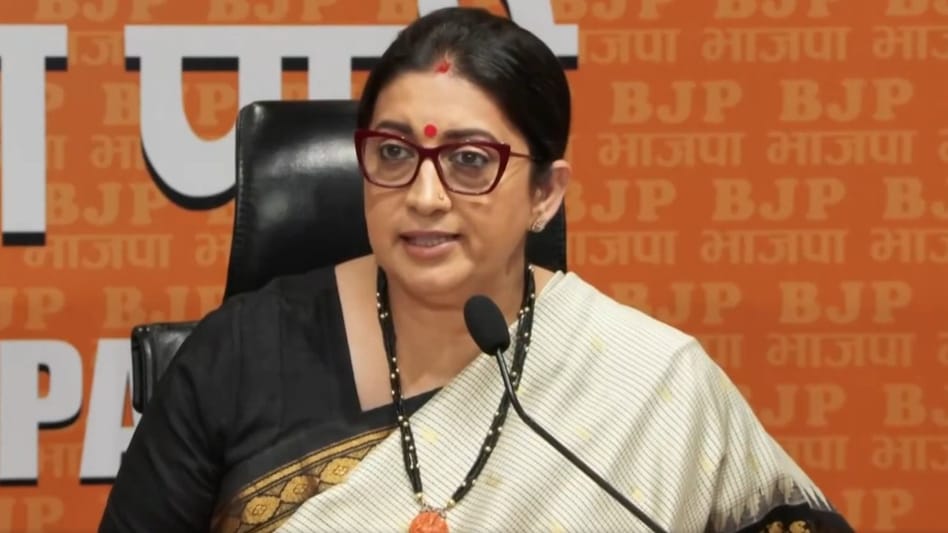
Following the failure of the constitutional amendment bill concerning women’s reservation in the Lok Sabha, the verbal conflict between the Congress and BJP has escalated. After a Congress General Secretary, BJP leaders held a press conference to launch a counterattack.
Lok Sabha
The Lok Sabha is the lower house of India’s bicameral Parliament, located in New Delhi. Established by the Constitution of India in 1952, it is the primary legislative body where members are directly elected by the people. It holds significant power, including approving the national budget and overseeing the Council of Ministers.
Lok Sabha
The Lok Sabha is the lower house of India’s bicameral Parliament, located in New Delhi. Established by the Constitution of India in 1952, it is the primary legislative body where elected representatives (Members of Parliament) debate and pass laws. Its history is tied to India’s independence, succeeding the Constituent Assembly and embodying the democratic principles of the world’s largest democracy.
Lok Sabha
The Lok Sabha is the lower house of India’s bicameral Parliament, located in New Delhi. Established by the Constitution of India in 1952, it is the primary legislative body where members are directly elected by the people. Its history is tied to India’s democratic transition, evolving from the colonial-era legislative assemblies to becoming the central forum for national lawmaking and government accountability.
Constitution of India
The Constitution of India is the supreme legal document that established the framework for the country’s democratic republic after gaining independence from British rule. It was adopted on November 26, 1949, and came into effect on January 26, 1950, marking India’s transition to a sovereign nation. It is renowned as one of the world’s longest and most detailed constitutions, enshrining fundamental rights, duties, and directive principles for its citizens.
New Delhi
New Delhi is the capital city of India, officially inaugurated in 1931 as the new seat of the government, replacing Calcutta. It was designed by architects, featuring wide boulevards and grand colonial-era buildings like the Rashtrapati Bhavan and India Gate. Today, it serves as the political and administrative heart of the country, housing key government institutions and historical monuments that reflect both its imperial past and its modern role as the capital of the world’s largest democracy.
India’s bicameral Parliament
India’s bicameral Parliament, known as the Sansad, is the supreme legislative body
<h3 class
Lok Sabha
The Lok Sabha is the lower house of India’s bicameral Parliament, located in New Delhi. Established by the Constitution of India in 1952, it is the primary legislative body where members are directly elected by the people. Its history is tied to India’s post-independence democracy, operating from the iconic Sansad Bhavan (Parliament House), a heritage building originally opened in 1927 during the British colonial era.
Constitution of India
The Constitution of India is the supreme legal document that established the framework for the country’s democratic republic after gaining independence from British rule. It was adopted by the Constituent Assembly on November 26, 1949, and came into effect on January 26, 1950, marking India’s transition to a sovereign nation. Drafted under the chairmanship of Dr. B.R. Ambedkar, it is renowned as one of the world’s longest and most detailed constitutions, enshrining fundamental rights, duties, and directive principles for its citizens.
New Delhi
New Delhi is the capital of India, officially inaugurated in 1931 as the new seat of the British Raj government, replacing Calcutta. It was designed by British architects Edwin Lutyens and Herbert Baker, featuring wide boulevards and grand colonial-era buildings like the Rashtrapati Bhavan and India Gate. Today, it serves as the political and administrative heart of the country, adjacent to the historic city of Old Delhi.
India’s bicameral Parliament
India’s bicameral Parliament, known as the Sansad, is the supreme legislative body of the Republic of India. It consists of two houses: the directly elected Lok Sabha (House of the People) and the Rajya Sabha (Council of States), whose members are largely elected by state legislatures. Its current building in New Delhi was opened in 1927 during the British colonial era, but the parliamentary system itself was established with India’s constitution upon independence in 1950.