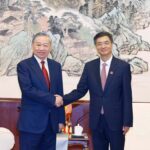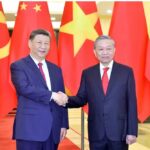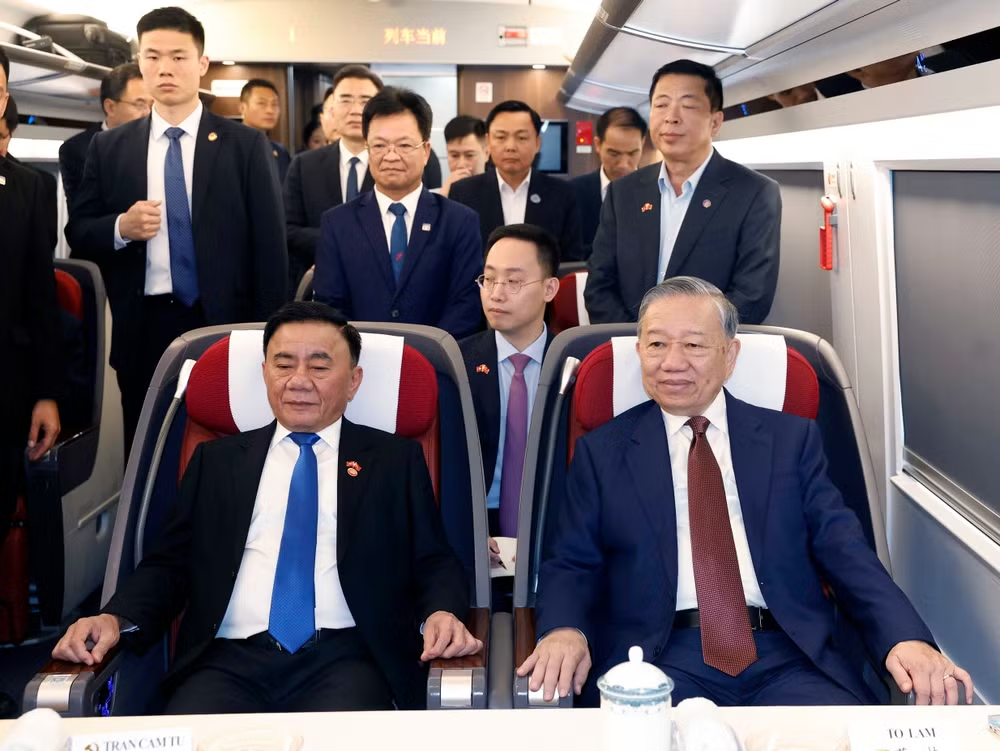
At the station, seeing off the General Secretary, President To Lam and his wife, along with the high-level Vietnamese delegation, were officials and staff of the Vietnamese Embassy in China.
Accompanying General Secretary, President To Lam and his wife to Nanning were officials.
During the journey experience, the Chinese railway industry leader gave a brief report to General Secretary, President To Lam on the sector’s development. In 2004, the “Medium and Long-Term Railway Network Plan” was issued. To date, China has built a widely connected railway network with a connection rate to cities with a population of 200,000 or more reaching 99%; over 130 county-level localities nationwide have railways.
As of early 2026, China’s operating railway system has reached a total length of 165,000 km. Among this, high-speed rail accounts for approximately 54,000 km, leading the world and constituting over 70% of the global total high-speed rail length.
China has set a roadmap to form a modern, high-quality transportation network by the end of 2035, in which the railway will reach a total length of 200,000 km, playing a leading role in the overall transportation system, connecting all county-level administrative units and above, border gates, and key infrastructure areas.
General Secretary, President To Lam expressed his impression of China’s railway network developing rapidly in scale and being among the most extensively operated in the world; in the near future, the network will continue to expand strongly. The General Secretary, President expressed hope that the two countries will continue to strengthen cooperation in developing transportation infrastructure, especially railway connectivity, for the green development and growth of each nation.
Emphasizing the significance of cooperation with China in the railway transportation sector, General Secretary, President To Lam proposed that Chinese railway industry leaders and enterprises share experience in railway industry development by supporting and participating with Vietnam in the process of implementing railway projects.
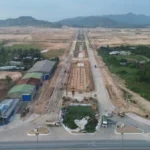
During a recent field inspection on the implementation of cooperation and railway connectivity between Vietnam and China in Lang Son province, General Secretary, President To Lam affirmed that cooperation in the railway sector is both a need and an opportunity. If implemented well and managed correctly, this will be one of the practical areas of cooperation, promoting border trade and economic development, diversifying international transport routes, strengthening regional economic connectivity, and enhancing Vietnam’s position in the Asian supply chain.