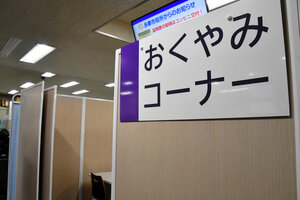
Starting April 1st, a “Condolence Corner” has been established within the Citizens Affairs Division on the first floor of the city hall. This service allows bereaved family members who have submitted a death notification to complete various subsequent procedures in a one-stop manner, aiming to reduce the burden on families who are often overwhelmed by numerous formalities.
According to the Citizens Affairs Division, the procedures required after a death typically involve an average of six different municipal departments and about 15 types of documents. While these processes previously took half a day to a full day, consolidation at the corner is expected to shorten the time to approximately one hour.
In principle, an appointment made by phone (042-338-6941) at least four business days in advance is required. During the appointment booking, details such as the deceased’s name and address are collected to identify the necessary procedures. For any procedures that cannot be handled on the spot, guidance to the relevant department will be provided.
A 67-page “Condolence Handbook” listing all procedures has also been created. It includes procedures that the city itself cannot handle and is distributed, for example, when the death notification is submitted. The handbook is also available on the website. “We want to support bereaved families so they can proceed with the procedures with peace of mind,” a representative stated.