By 2030, the Huilongguan-Tiantongyuan Area to Be Basically Built into a Vibrant, Livable, Work-Friendly, Harmonious, and Orderly Happy Home
On April 15, a press conference was held to officially release the “Further Action Plan for the Enhancement and Development of the Huilongguan-Tiantongyuan Area (2026–2030)” (referred to as the “Third Round Huilongguan-Tiantongyuan Action Plan”). As the action program for the area’s development during the “15th Five-Year Plan” period, the third round of actions will closely align with the goal of building a modern people’s city. Centered on the three main lines of high-quality development, high-quality living, and high-efficiency governance, it will launch 22 specific tasks and 127 key projects, aiming to basically build the Huilongguan-Tiantongyuan area into a vibrant, livable, work-friendly, harmonious, and orderly happy home by 2030.
Huilongguan-Tiantongyuan Area Transforms, Significantly Supplementing Shortcomings in People’s Livelihood Across Various Fields
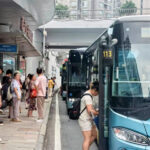
The Huilongguan and Tiantongyuan areas, as large-scale community clusters in Beijing, were once called “bedroom communities” and “congested cities” due to traffic jams and insufficient amenities. Since 2018, two rounds of the Huilongguan-Tiantongyuan Action Plan have been successively implemented, cumulatively arranging 246 key projects with a total investment of 43.7 billion yuan. Over 200 projects, including the second phase of Tsinghua Chang Gung Hospital, the first phase of the Beiqing Road Expressway upgrade, and Rail Transit Line 18, have been completed and put into use. Thirty-seven municipal-level units and 84 district-level units have carried out over 8,000 service visits, promoting the resolution of a number of urgent and difficult issues concerning the people.
After two rounds of action, a cumulative increase of 23,000 school places and 1,920 hospital beds has been achieved, with 18 parks and 54 cultural venues built. The third round of action will continue to adhere to the principle of “following one blueprint to the end,” ensuring a new milestone each year and annual changes.
Nearly 4,000 Public “Golden Ideas” Collected, Precisely Responding to People’s Livelihood Expectations
The third round of action actively implements the “Three Persistences” and “Three Emphases.” Regarding the “Three Persistences,” it will continue long-term efforts to solidify the development foundation. By collecting nearly 4,000 public “golden ideas,” it will precisely address urgent and difficult issues in education, healthcare, elderly care, and other areas. Simultaneously, it will deepen the “integrated hardware-software” governance model, uniting the efforts of multiple stakeholders including residents, enterprises, and social organizations to build a governance community of co-governance and sharing, allowing governance achievements to better benefit the people.
Regarding the “Three Emphases”: First, emphasize job-housing balance to make the area more vibrant. The third round of action will continue to optimize functional layouts, focus on industrial support, and provide more employment and entrepreneurship opportunities. It will also upgrade consumption scenes, promote the construction of innovative industrial communities and rail transit micro-centers, making it attractive for young people to come, stay, and develop well. Second, emphasize quality improvement to make the area more livable and happier. It will continue to expand the supply of high-quality public services, vigorously implement urban renewal, focus on renovating old residential communities, systematically promote the construction of complete communities, making life more comfortable, the environment more beautiful, and the home warmer for residents. Third, emphasize modernized governance to make the area safer and smarter. The third round of action will accelerate the construction of a resilient area, continuously improve the regional road network system, carry out updates to old pipelines for water, electricity, gas, and heating, and enhance urban safety and resilience. At the same time, adapting to new trends in digital and intelligent development, it will promote the iterative upgrade of the area’s “city brain,” making urban governance more intelligent, efficient, refined, and sophisticated.
22 Specific Tasks and 127 Key Projects to Be Implemented
The third round of action, centered on high-quality development, high-quality living, and high-efficiency governance, focuses on “six deepenings and one model,” arranging 22 specific tasks. Through deepening the implementation of expanding and improving public services, enhancing urban safety and resilience, making transportation networks convenient and smooth, beautifying and making living environments livable, demonstrating and leading urban renewal, revitalizing industrial and consumer vitality, and