Breaking: Trump announces blockade of Strait of Hormuz
U.S. President Announces Navy Will Begin Blockade of Strait of Hormuz
On April 12, the U.S. President declared that the country’s navy would “immediately” establish a blockade of the Strait of Hormuz and prevent all vessels from entering or leaving the area. This announcement came just hours after the latest round of U.S.-Iran peace talks in Pakistan concluded without any agreement.
U.S. Will Pursue Vessels That Have Paid Iran
President Trump stated on the social media platform Truth Social: “Effective immediately, the U.S. Navy will begin the process of blockading any vessel seeking to enter or leave the Strait of Hormuz.”
The U.S. President asserted that at some point, Washington would move towards an agreement based on the principle of “all allowed in, all allowed out.” However, he accused Iran of preventing this by being vague about the possibility of “a naval mine being out there somewhere.”
President Trump called this action “global-scale extortion” and stated that leaders, especially the United States, “will never be extorted.”
“I have also directed the navy to pursue and intercept any vessel on international waters that has paid fees to Iran. No one paying illegal fees will travel safely on international seas,” President Trump wrote.
The U.S. President also threatened to begin destroying naval mines that Iran has laid in the strait, issuing a direct warning: “Any Iranian who fires upon us, or upon peaceful vessels, will be blown to pieces!”
President Trump further emphasized that Washington is prepared to “finish” Iran at the “appropriate time,” stating that Tehran’s nuclear ambitions are the core reason the war cannot be ended.
The Strait of Hormuz is a strategic maritime route, which before the war transported 20% of the global oil supply. Iran’s restriction of passage through this strait since being attacked by the U.S. and Israel has caused severe disruption to the global energy supply chain.
It is currently unclear how the global energy market might fluctuate now that the U.S. is also blockading this strait.
President Trump’s announcement came one day after he declared that many empty oil tankers were heading towards the U.S. to purchase oil. This implies that many markets are turning to the U.S. as an alternative oil and gas supplier to the Middle East.
A Matter of “He Said, She Said”
U.S. officials accused the latest round of talks of collapsing because Iran refused to commit to abandoning its path towards nuclear weapons. For its part, Tehran blamed Washington for the breakdown in negotiations but did not specify the exact sticking point.
Neither side revealed what would happen when the 14-day ceasefire expires on April 22. Meanwhile, Pakistan—the country acting as the negotiation mediator—strongly urged the parties to maintain the agreement.
Both Washington and Tehran asserted that their positions were clear and placed responsibility on the other side. This more or less indicates that the gap between the two sides has hardly narrowed throughout the negotiation process.
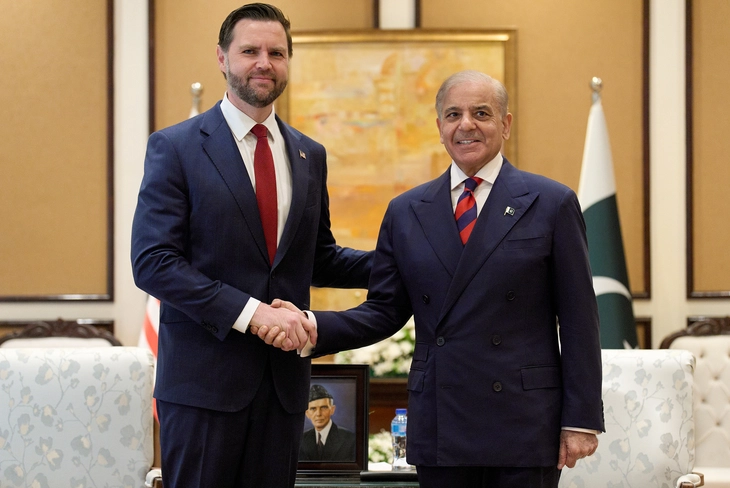
The U.S. Vice President stated after the talks: “We need to see a firm commitment that they will not pursue nuclear weapons and that they will not pursue the means that would allow them to quickly obtain nuclear weapons.”
Iran’s Parliament Speaker Mohammad Bagher Ghalibaf, who led Tehran’s negotiation team, responded: “It is time for the U.S. to decide whether they can earn our trust or not.”
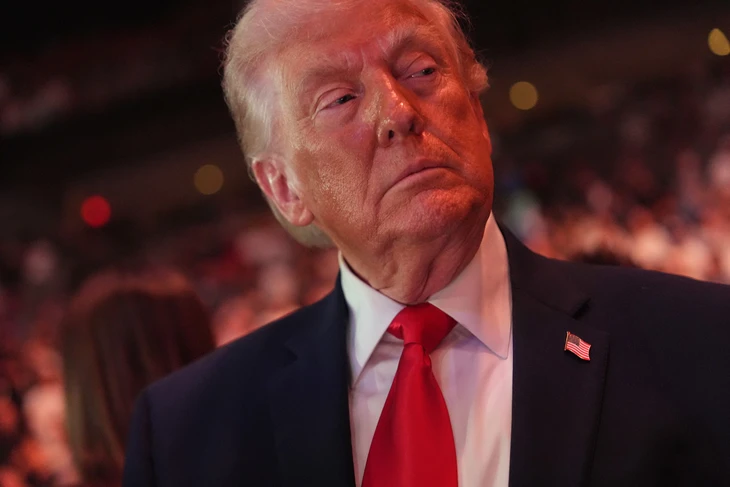
While the U.S. delegation was engaged in tense 21-hour negotiations with Iran in Pakistan, President Trump was enjoying the lively atmosphere of a UFC event in Florida. He also stated he was not concerned about the outcome of the negotiations.
Strait of Hormuz
The Strait of Hormuz is a strategically vital maritime chokepoint connecting the Persian Gulf with the Gulf of Oman and the Arabian Sea. Historically, it has been a key trade route for centuries, but in the modern era, it is critically important for global energy security, as about one-fifth of the world’s oil passes through it. Its geopolitical significance has led to periods of tension and conflict, particularly involving the nations that border it, such as Iran and Oman.
United States
The United States is a federal republic founded in 1776 after declaring independence from Great Britain, with its modern government established by the Constitution in 1789. Culturally, it is a vast and diverse nation shaped by Native American heritage, waves of immigration, and the significant legacy of African Americans, particularly through the history of slavery and the Civil Rights Movement. Its global cultural influence is profound, spanning music, cinema, technology, and democratic ideals.
Iran
Iran, historically known as Persia, is a country in Western Asia with one of the world’s oldest continuous civilizations, dating back to the Elamite kingdoms of the 4th millennium BCE. It is home to numerous UNESCO World Heritage sites, including the ancient ceremonial capital of Persepolis and the grand Naqsh-e Jahan Square in Isfahan, reflecting its profound influence on art, architecture, and empire across millennia. Today, Iran’s rich cultural identity is shaped by its pre-Islamic Zoroastrian heritage and its pivotal role in the Islamic world following the 7th-century Arab conquest.
Pakistan
Pakistan is a modern nation-state established in 1947 as a homeland for Muslims of British India, with a rich history rooted in the ancient Indus Valley Civilization. Its cultural landscape is a tapestry of diverse ethnic groups, languages, and traditions, heavily influenced by Islamic heritage as well as Persian, Central Asian, and South Asian legacies. Key historical sites include the archaeological ruins of Mohenjo-daro, the Mughal-era Badshahi Mosque in Lahore, and the mountainous Silk Road outpost of Baltit Fort in Hunza.
Israel
Israel is a modern nation-state established in 1948 in the historical region of the Land of Israel, an area with profound ancient roots as the homeland of the Jewish people and a central region in Judaism, Christianity, and Islam. Its history spans millennia, including biblical kingdoms, Roman rule, and later periods under various empires, before becoming a British Mandate in the 20th century. Today, it is a vibrant country known for its significant archaeological sites, such as Jerusalem’s Old City and Masada, and its dynamic, diverse society.
Washington
Washington, D.C., the capital of the United States, was founded in 1790 as a planned city to serve as the seat of the federal government. It is named after George Washington and is home to iconic landmarks like the White House, the U.S. Capitol, and the Washington Monument, which symbolize the nation’s history and democratic ideals. The city’s design, influenced by Pierre L’Enfant, features grand avenues and numerous museums, many of which are part of the Smithsonian Institution.
Tehran
Tehran is the capital and largest city of Iran, officially becoming the capital in 1786 under the Qajar dynasty. It is a major political and economic center, home to significant modern landmarks like the Azadi Tower and historical sites such as the opulent Golestan Palace, a UNESCO World Heritage site from the 19th century. The city’s history, however, stretches back centuries, with archaeological evidence of settlements dating to the 6th millennium BCE.
Florida
Florida is a southeastern U.S. state known for its extensive coastline, theme parks, and warm climate. Historically, it was first colonized by Spain in 1513, making it the oldest European-established region in the continental U.S., before becoming a U.S. territory in 1821 and a state in 1845. Its culture is a vibrant blend of Southern, Latin American, and Caribbean influences, shaped by its diverse population and tourism.