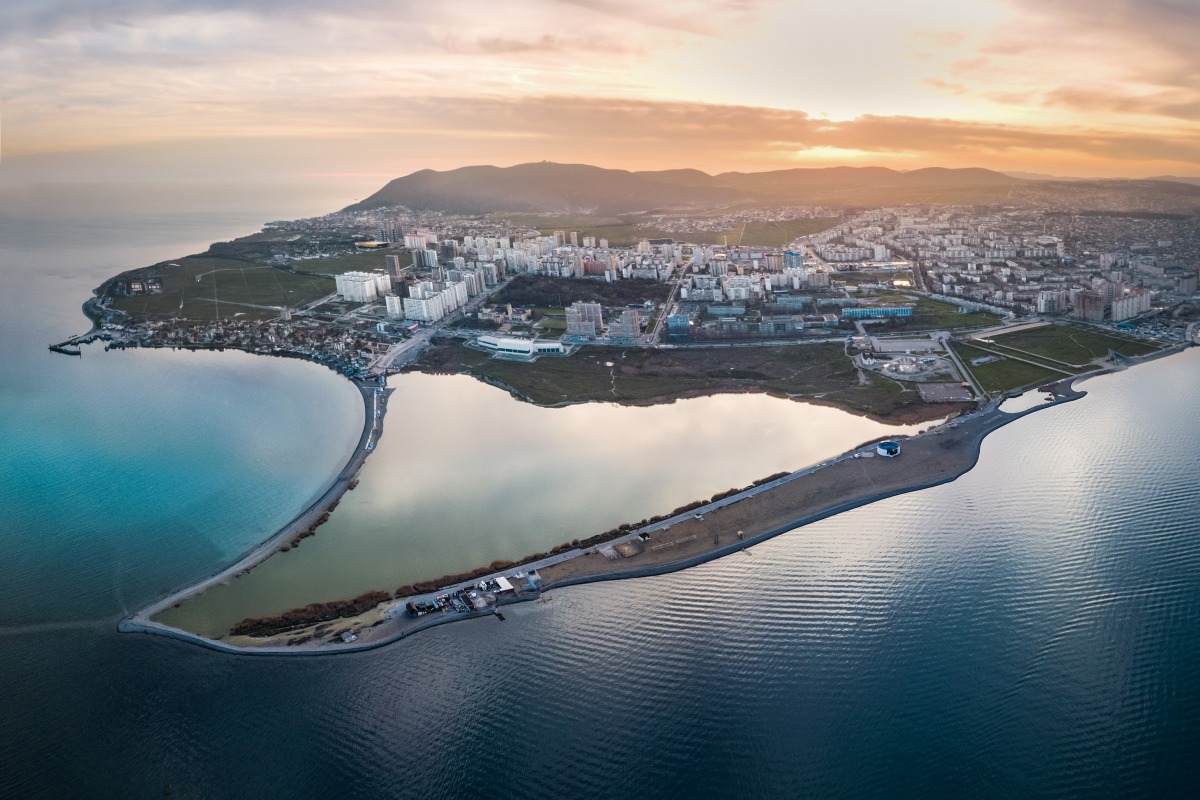
The Greek tanker Maran Homer was attacked in the Black Sea near Novorossiysk on the morning of March 14.
The Greek Minister of Shipping expressed the opinion that the attack on the vessel may be linked to the US decision to ease sanctions on Russian oil.
“It is assumed that this strike is part of the pressure being exerted by countries in the region. And, perhaps, it is also related to decisions that were made to partially allow the transportation of Russian oil for a month,” the minister said.
Due to the conflict in the Middle East, there have been disruptions in oil supplies and an increase in fuel prices. In connection with this, the US allowed the sale of Russian oil products. This concerns oil that was loaded onto tankers by March 12. The permission is valid until April 11 and does not apply to transactions related to Iran.
The tanker Maran Homer was 14 nautical miles from Novorossiysk. There were 24 sailors on board the vessel. No people were injured.
At the time of the incident, the tanker was empty. Minor damage was sustained to the decks and deck equipment.
Novorossiysk
Novorossiysk is a major port city on Russia’s Black Sea coast, founded in 1838 as a naval base. It played a significant role in World War II, enduring intense fighting during the Battle of the Caucasus, and today is a crucial hub for shipping and cement production.
Black Sea
The Black Sea is a large inland sea bordered by Eastern Europe and Western Asia, historically serving as a vital trade and cultural crossroads. It was central to ancient Greek colonization, with cities like Byzantium (later Constantinople) founded on its shores, and later became a key route for medieval Slavic, Byzantine, and Ottoman powers. Its unique anoxic deep waters have preserved ancient shipwrecks, offering exceptional archaeological insights.
Maran Homer
“Maran Homer” is not a widely recognized historical or cultural site in major global references. It may refer to a local or lesser-known location, possibly with regional significance. Without more specific context, it is not possible to provide a verified summary of its history or importance.
Greek Minister of Shipping
The “Greek Minister of Shipping” is not a place or cultural site, but a government position. This cabinet minister oversees Greece’s vital maritime industry, a sector with deep historical roots dating back to the ancient Minoan and Classical Athenian eras, which established Greece’s enduring legacy as a global seafaring nation. The ministry itself is based in Athens and is responsible for one of the world’s largest merchant fleets.
Middle East
The term “Middle East” refers to a transcontinental region centered on Western Asia and parts of North Africa, historically known as the “Cradle of Civilization” for the rise of ancient societies like Mesopotamia and Egypt. It is the birthplace of major world religions—Judaism, Christianity, and Islam—and has been a central crossroads for trade, empires, and cultural exchange for millennia. In the modern era, its vast oil reserves and complex geopolitical dynamics continue to give it significant global importance.
US
The United States is a relatively young nation, founded in 1776 after declaring independence from Great Britain. Its history spans from indigenous civilizations and European colonization to becoming a global superpower, shaped by immigration, territorial expansion, and a democratic federal system. Culturally, it is a diverse mosaic known for its significant global influence in areas like technology, entertainment, and popular culture.
Russia
Russia is a vast transcontinental nation with a rich and complex history, originating from the medieval state of Kievan Rus’ and later evolving into the Tsardom of Russia and the Russian Empire. Its cultural heritage is deeply shaped by Orthodox Christianity, imperial architecture, and a profound tradition in literature, music, and ballet. Key historical sites include the Kremlin and Red Square in Moscow, the Hermitage Museum in Saint Petersburg, and numerous historic cities along the Golden Ring.
Iran
Iran, historically known as Persia, is a country in Western Asia with one of the world’s oldest continuous major civilizations, dating back to the Elamite kingdoms of the 4th millennium BCE. It is home to numerous UNESCO World Heritage Sites, including the magnificent ruins of Persepolis, the ceremonial capital of the Achaemenid Empire founded in the 6th century BCE. Today, Iran’s rich cultural heritage is reflected in its intricate architecture, poetry, and traditions, shaped by successive empires and its 1979 Islamic Revolution which established the current theocratic republic.