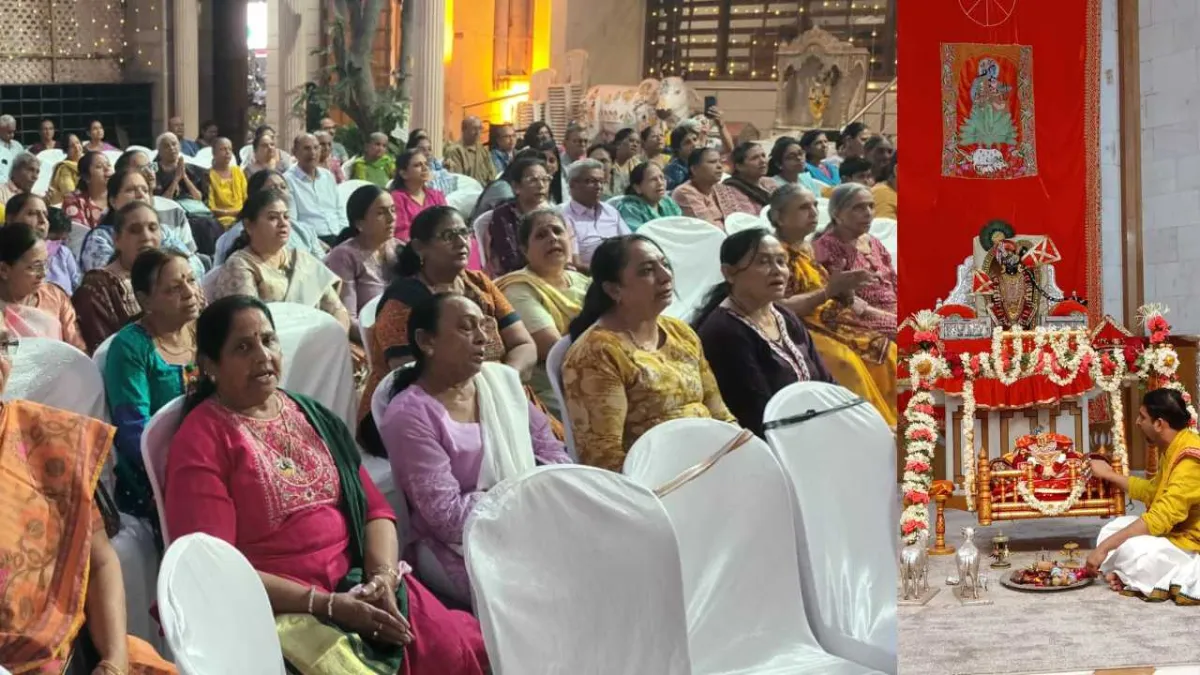
The 31st Patotsav of Shri Govardhan Nathji’s Haveli, located on Dumas Road, was celebrated with devotion and joy on Saturday. On this occasion, a large number of Vaishnavas received blessings by having darshan of Thakorji adorned with a tilak, seated in a flower-decked palanquin and floral mandali. In the evening, devotees swayed to the melodious tunes of bhajans during the bhajan sandhya organized in the haveli courtyard.
Special events were held at the haveli on the Dashami tithi of the Phalguna month, Saturday, to mark the completion of 31 years since the idol’s prana pratishtha. Over the past three decades, the haveli’s popularity has steadily grown, and today it has become a major center of faith for Vaishnavas and devotees in Surat city and surrounding areas.
On the occasion of Patotsav, at 9:30 AM on Saturday, Shri Thakorji was seated in a flower-decked palanquin and lovingly pampered. Following this, at 11 AM, Thakorji was seated in a floral mandali and adorned with a tilak. During this time, a large number of Vaishnavas arrived at the haveli for darshan and to receive blessings.
From 6 PM to 8 PM, a bhajan sandhya was organized in the haveli’s courtyard, featuring melodious bhajan performances. To the harmonious tunes of the bhajans, the attending Vaishnavas became ecstatic and swayed with devotion, filling the entire atmosphere with a devotional spirit.
Shri Govardhan Nathji’s Haveli
Shri Govardhan Nathji’s Haveli is a historic temple and residence (haveli) in Nathdwara, Rajasthan, dedicated to the Hindu deity Krishna in his form as Shri Nathji. It was established in the 17th century after the idol was moved from Vrindavan to protect it from Mughal persecution, becoming the central seat of the Pushtimarg sect of Vaishnavism. The haveli is renowned for its intricate architecture and the daily rituals (darshans) performed for the deity, which are central to the devotional life of the community.
Dumas Road
Dumas Road is a popular coastal promenade and beach area in Surat, Gujarat, India, known for its vibrant atmosphere and food stalls. Historically, the road and beach are named after Sir John Dumas, a British colonial administrator who served as the Commissioner of the Surat district in the late 19th century. Today, it serves as a major local leisure destination, especially in the evenings.
Thakorji
“Thakorji” is a common Gujarati and Rajasthani term of reverence for a consecrated image or idol of a Hindu deity, particularly Lord Krishna, in a temple or home shrine. These sacred icons often have a rich local history, with many being ancient and believed to be *swayambhu* (self-manifested) or installed by revered saints centuries ago. They serve as the central focus of daily worship and community festivals, embodying deep devotional traditions.
Patotsav
“Patotsav” is a Hindu religious festival, not a physical place or cultural site. It is a ceremonial ritual of “awakening” or consecrating a temple deity, often performed after renovations or during special occasions. The history of Patotsav is rooted in ancient Vedic and Agamic temple traditions, symbolizing the infusion of divine life-force into an idol.
Prana Pratishtha
“Prana Pratishtha” is not a specific place or cultural site, but a central Hindu ritual of consecration. It is the ceremony through which a deity’s divine presence is invoked and installed into a sacred image (murti) or idol, making it a living object of worship. The ritual, with Vedic origins, involves complex rites, mantras, and offerings to invite the deity to reside within the physical form.
Dashami tithi
“Dashami tithi” is not a specific place or cultural site, but a date in the traditional Hindu lunar calendar, marking the tenth day of the waxing or waning phase of the moon. It holds significant religious importance, most notably as the day of Vijayadashami (the culmination of the Navaratri festival), which celebrates the victory of good over evil, such as Lord Rama’s victory over Ravana and Goddess Durga’s triumph over the buffalo demon Mahishasura.
Phalguna month
“Phalguna month” is not a specific place or cultural site, but a month in the Hindu lunar calendar, typically falling between February and March in the Gregorian calendar. It is historically and culturally significant as it hosts major festivals like Holi, the festival of colors, and often marks the end of winter and the arrival of spring in many Indian traditions.
Bhajan Sandhya
“Bhajan Sandhya” is not a specific physical place or historical site, but a common term in Hindu culture for an evening gathering of devotional singing (bhajans). These events are held in temples, community halls, or homes, and their history is rooted in ancient Indian traditions of congregational worship through music and poetry to express devotion to deities. They serve as a spiritual and communal practice that strengthens religious and social bonds.