Al-Shahari: Founding Day marks the beginning of a nation that shaped the future and solidified identity.
It was affirmed that everything has a beginning, and the most beautiful beginnings are those that open the doors to a bright future and plant renewed hope in souls. It was pointed out that Founding Day on February 22, 1727, was not merely a date to be recorded, but a pivotal moment that reshaped the course and established the pillars of a state built on order, unity, and stability.
It was explained that this day represents the birth of a renewed meaning in the national consciousness. From it, we learn how chaos transforms into order, dispersion into unity, and fear into tranquility, under a leadership that placed a tolerant creed as the foundation for building the state and entrenching the values of justice and benevolence.
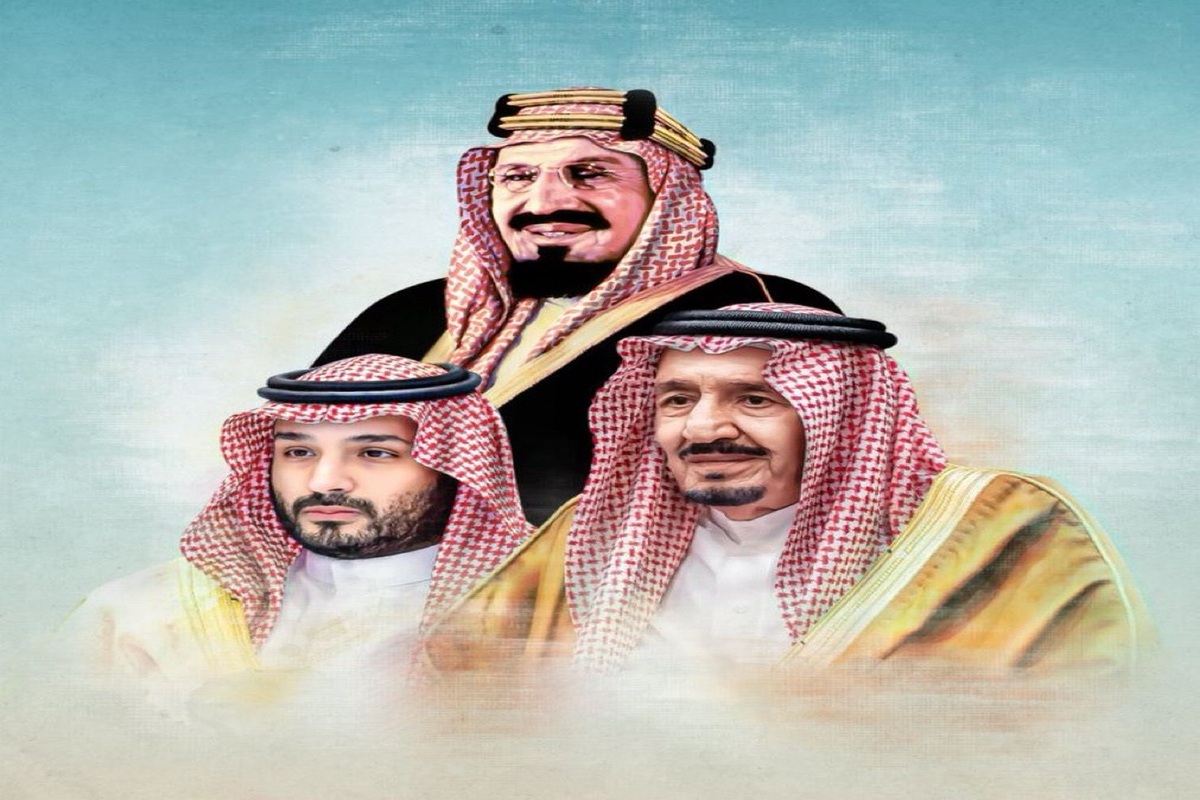
It was clarified that the journey that began with the First and Second Saudi States, and was crowned by the Founding King Abdulaziz bin Abdulrahman Al Saud – may God have mercy on him – with the unification of the country under one banner, formed a historic turning point that created a strong state with its own identity, firmly rooted in its values, and extending its influence across generations.
It was noted that Founding Day is a day of pride in an extended era of noble kings who carried the trust and enhanced the march of construction and development, until the Kingdom became a model of stability and renaissance, and an economic and investment center that attracts ambitions and embraces initiatives.
It was added that pride in the Kingdom is not limited to belonging, but extends to active contribution in its journey. It was emphasized that investing in it represents a practical message of gratitude and a sincere translation of loyalty to wise leadership and a giving homeland that has embraced its sons and residents on its pure land.
The statement concluded with a prayer for God to protect the Kingdom under the leadership of the Custodian of the Two Holy Mosques King Salman bin Abdulaziz Al Saud, and His Royal Highness the Crown Prince Mohammed bin Salman bin Abdulaziz – may God protect them – and to perpetuate upon the homeland its security, stability, and prosperity, and to protect its people and all who reside on its soil.
First Saudi State
The First Saudi State, also known as the Emirate of Diriyah, was founded in 1744 through an alliance between the religious reformer Muhammad ibn Abd al-Wahhab and the political leader Muhammad ibn Saud in the central Arabian region of Najd. It rapidly expanded its power and territory, championing a strict interpretation of Islam, until it was destroyed by the Ottoman Empire in the 1818 siege of Diriyah. This state established the political and ideological foundations for the later Second Saudi State and the modern Kingdom of Saudi Arabia.
Second Saudi State
The Second Saudi State, also known as the Emirate of Nejd, was a historical monarchy that existed from 1824 to 1891. It was established by Turki bin Abdullah bin Muhammad after the collapse of the First Saudi State, restoring Riyadh as its capital and reasserting Wahhabi religious authority. The state ultimately fell due to internal dynastic rivalries within the House of Saud, which led to its conquest by the rival Al Rashid dynasty from Ha’il.
Founding King Abdulaziz bin Abdulrahman Al Saud
This refers to the founding monarch of the modern Kingdom of Saudi Arabia, King Abdulaziz bin Abdulrahman Al Saud (c. 1876–1953), also known as Ibn Saud. Beginning in 1902 with the capture of Riyadh, he led a decades-long military and political campaign to unify the vast majority of the Arabian Peninsula. He formally declared the Kingdom of Saudi Arabia in 1932 and established the systems of governance based on Islamic law that define the nation today.
Kingdom
The term “Kingdom” is too broad for a specific summary, as it could refer to many historical or modern nations (e.g., the United Kingdom, the Kingdom of Saudi Arabia) or fictional realms. In general, a kingdom is a form of government ruled by a monarch, such as a king or queen, and has been a dominant political structure throughout much of human history, from ancient Mesopotamia to contemporary constitutional monarchies.
Custodian of the Two Holy Mosques
The “Custodian of the Two Holy Mosques” is a royal title used by the King of Saudi Arabia, signifying his responsibility for Islam’s holiest sites: the Grand Mosque in Mecca and the Prophet’s Mosque in Medina. Historically, the title was first adopted in the 1980s by King Fahd to emphasize the monarchy’s Islamic legitimacy and its role in protecting and serving pilgrims. It underscores the deep connection between the Saudi state and its guardianship of the annual Hajj pilgrimage.
King Salman bin Abdulaziz Al Saud
King Salman bin Abdulaziz Al Saud is not a place or cultural site, but the current King and Custodian of the Two Holy Mosques of Saudi Arabia. He ascended to the throne in 2015 and has been a central figure in the kingdom’s modern history, overseeing significant social and economic reforms under the Vision 2030 program. His name is also associated with various development projects and institutions, such as the King Salman Park in Riyadh.
Crown Prince Mohammed bin Salman bin Abdulaziz
“Crown Prince Mohammed bin Salman bin Abdulaziz” is not a place or cultural site, but a person—the de facto ruler and Crown Prince of Saudi Arabia. He is a major figure in modern Saudi history, known for launching the “Vision 2030” initiative to diversify the nation’s economy and modernize its society.
Founding Day
“Founding Day” is a national holiday in Saudi Arabia, celebrated annually on February 22 to commemorate the founding of the First Saudi State in 1727 by Imam Muhammad bin Saud. The holiday, established in 2022, honors the deep historical roots of the Saudi nation and its over three centuries of governance and cultural heritage. It is marked by official ceremonies, cultural events, and displays of national pride across the Kingdom.