Chinese Scientists Make Breakthrough in Hydrogen-Carbon Co-Production Technology, Zero-Pollution Hydrogen Production Aids Energy Transition
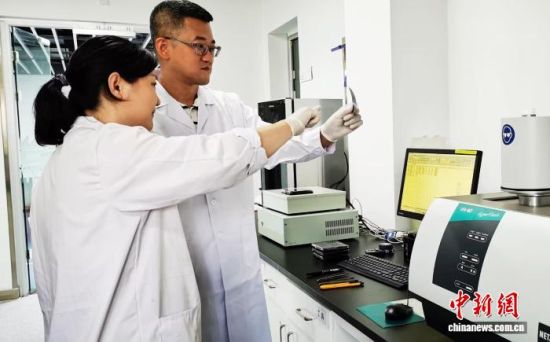
Recently, a researcher has been busy tackling the issue of continuous operation for pyrolysis reactors, hoping to soon increase the stable, continuous runtime to one month.
Supported by research platforms, the team has been making continuous efforts in areas such as natural gas pyrolysis for hydrogen-carbon co-production and graphene wafer preparation. Among these, the natural gas pyrolysis hydrogen-carbon co-production technology has received support from national key research and development plans, becoming an important pathway for green hydrogen and carbon production.
The researcher returned to China in 2018 to dedicate efforts to the research, development, and industrialization of natural gas pyrolysis hydrogen-carbon co-production technology. In a recent interview, they stated: “I am fortunate to have grown alongside China. China is initiating large-scale foundational innovation, and what I am doing is innovative work.”
They observed that innovation capital in China is being invested evenly and is flourishing in cutting-edge fields like new materials and chemical engineering, providing fertile ground for technology transfer.
In 2021, a company was founded to advance the large-scale preparation of clean hydrogen and high-purity carbon materials. The pyrolysis technology developed by the team can simultaneously produce high-purity hydrogen and graphite under almost zero-pollution operating conditions.
They explained that compared to traditional, highly polluting hydrogen and carbon production processes, this technology not only avoids greenhouse gas emissions but also offers cost and efficiency advantages in distributed scenarios such as chemical plants and hydrogen refueling stations, enabling the green, high-value utilization of methane resources.
Currently, the team is focusing on overcoming technical bottlenecks such as continuous system operation. It is estimated that within the next six months to two years, efforts will be made to promote the technology’s industrialization. Plans are also in place to achieve a demonstration application in Sichuan Province, which is rich in natural gas resources.
“In terms of market strategy, we plan to carry out large-scale production in natural gas-producing regions and also promote nationwide distributed hydrogen production in chemical sectors and hydrogen refueling stations with high hydrogen demand,” they said.
They were recognized as an “Outstanding Figure Among Overseas Chinese in Shanghai.” They hope this will help drive societal attention to scientific innovation and foster cross-disciplinary exchange, “allowing innovation to take root locally and talent to thrive.”
They value the agglomeration effects brought by Shanghai’s development as an international science and innovation center—the gathering of high-end talent, convenient flow of resources, and a diverse, open lifestyle provide an excellent environment for innovation and entrepreneurship. In their view, the overall advantages of the Yangtze River Delta region and Shanghai’s role as a hub allow scientific and technological workers to continuously draw nourishment, aiding both research and personal growth.
Facing the acceleration of hydrogen energy commercialization, they look forward to policies that continue to stimulate innovative vitality and promote industrial chain collaboration. Against the backdrop of the “Dual Carbon” strategy, they believe hydrogen energy will become a core component of the energy transition.
Speaking of the future, they hope to continue contributing to China’s innovation through original work, ultimately allowing these innovative achievements to impact the world.