-
Tamil Nadu Kulasekarapattinam Rail Line News: India, which has established itself as a major global space power, is now striving to become a global leader in satellite launches. For this, it is engaged in a mission to increase the capacity of its space launch centers and open new launch centers. The new launch center being built in Kulasekarapattinam, Tamil Nadu, is one of these. This new launch complex will be used specifically for launching small rockets (SSLVs).
A Special Railway Line to be Laid for Kulasekarapattinam
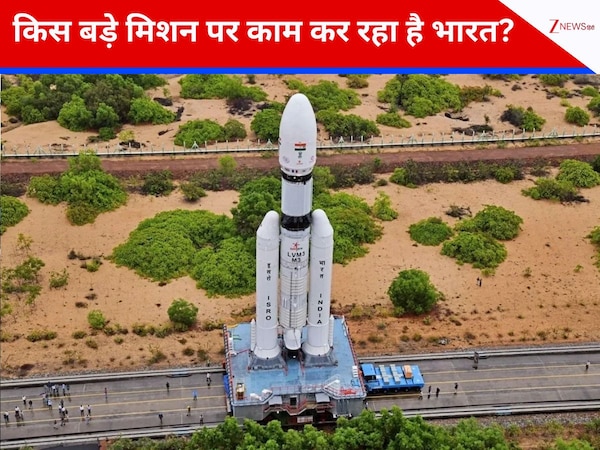
According to reports, ISRO is preparing to install a special type of railway line for Kulasekarapattinam. The Satish Dhawan Space Centre has issued a tender for this. This railway line will be approximately 1700 meters long. The main task of this line will be to transport fully assembled rockets from the assembly building to the launch pad, a distance of about 740 meters.
Sources indicate this will not be an ordinary passenger train or freight train, but a specially engineered rail system. This special train will be used as a Mobile Launch Structure (MLS), on which rockets carrying small satellites will be placed. The entire system, including these satellites, could weigh up to 570 tons. This weight will be so significant that each wheel of the train may have to bear a load of about 100 tons. Therefore, extremely strong steel and iron will be used in the rail to support such weight.
Height Variation Will Not Exceed 1 Millimeter
ISRO officials state that not only will this train be special, but its track will also be non-standard. The height variation of this rail will not exceed 1 millimeter, ensuring no unevenness whatsoever while transporting the rockets. This railway line will have a curved section and tracks of different gauges, allowing the launch structure to be parked to the side when necessary.
A unique feature of this system will be that when the track needs to be changed, the launch structure will be temporarily grounded. The wheels will then be lifted and manually rotated in the correct direction. After this, it will be placed back on the track and sent on its way.
The Plan to Make India a Space Leader
The government has allocated 986 crore rupees for this project, with a target completion date of 2026-27. The Satish Dhawan Space Centre under ISRO has set a period of 29 weeks for completion of the work in its tender notice. Officials say that if the work is not completed within the stipulated period, a penalty will be imposed on the selected company.
Why Was Kulasekarapattinam Chosen?
According to ISRO scientists, launching satellites weighing up to 300 kg into polar orbit from Sriharikota is quite challenging. However, with the new launch center in Kulasekarapattinam, this problem will be eliminated. After this, sending satellites into polar orbit from there will become much easier and more effective. Once this center is ready, private companies, along with ISRO, will also be able to launch their small rockets from there.
Kulasekarapattinam
Kulasekarapattinam is a coastal town in the Thoothukudi district of Tamil Nadu, India, historically significant as an ancient seaport. It is most renowned for the Mutharamman Temple, a major Hindu pilgrimage site dedicated to the goddess Mutharamman, which hosts the spectacular annual Dasara festival featuring traditional folk arts and fire-walking rituals.Satish Dhawan Space Centre
The Satish Dhawan Space Centre (SDSC) SHAR, located in Sriharikota, India, is the primary launch facility of the Indian Space Research Organisation (ISRO). Established in 1971 and later renamed in 2002 in honor of former ISRO chairman Satish Dhawan, it has been the launch site for historic missions like Chandrayaan-1 and Mangalyaan. Today, it serves as the nerve center for India’s satellite launches and ambitious interplanetary explorations.ISRO
ISRO, the Indian Space Research Organisation, is India’s national space agency, founded in 1969. It was established to advance space technology and its application for national development, famously launching its first satellite, Aryabhata, in 1975. Today, ISRO is globally recognized for cost-effective missions like the Mars Orbiter Mission (Mangalyaan) and its ambitious lunar exploration program.Sriharikota
Sriharikota is a barrier island off the coast of Andhra Pradesh, India, best known as the primary launch site of the Indian Space Research Organisation (ISRO). Historically a quiet, forested area, it was chosen in 1969 for its strategic location and established as the Satish Dhawan Space Centre, which has since become the nerve center for India’s satellite launches and space exploration missions.