The Vector Control Center in the Makkah region has intensified its field efforts to promote “One Health” and combat disease vectors, carrying out 2,800 surveillance operations and treating 6,000 sites to protect public health and limit epidemics.
The center launched large-scale operations to curb the outbreak of vector-borne diseases in the region.
Veterinary health teams began implementing the operational plan for field surveys and insect and larval investigations in the Holy Capital and the governorates of Taif, Al-Qunfudhah, and Al-Khurmah.
Treating Insect Breeding Sites
Field teams are intensively focusing their efforts on targeted and high-risk sites, particularly water ponds and swamps located outside residential areas.
These proactive measures aim to accurately identify insect species, assess their epidemiological risk, and take immediate action to treat insect breeding sites before they worsen.
The specialized teams use a diverse package of advanced treatment methods that combine biological, environmental, and chemical control to ensure the complete elimination of vectors.
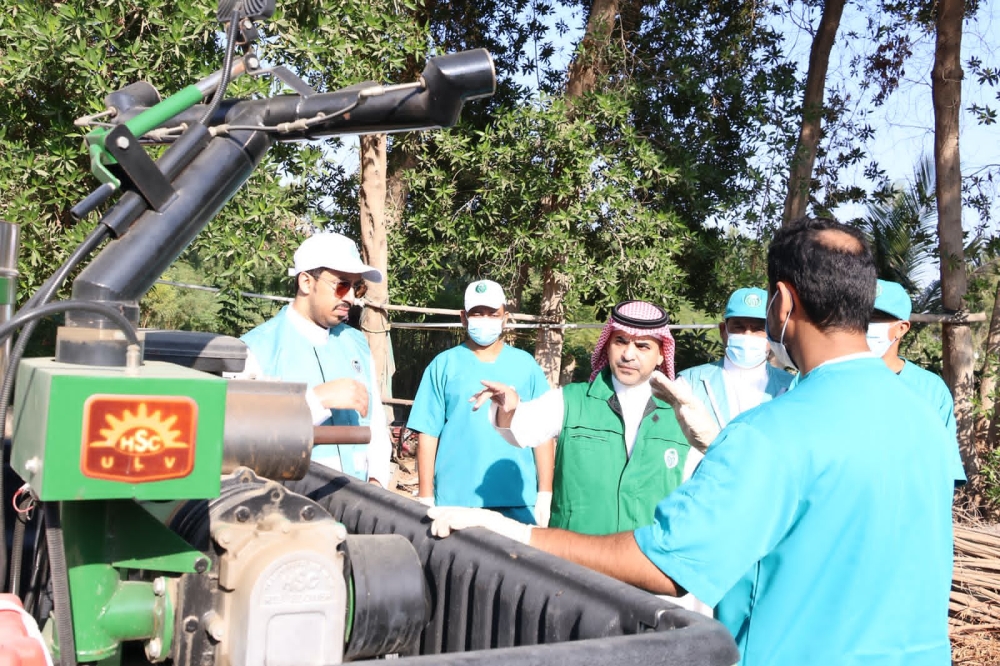
In a step to ensure performance quality, an inspection tour of the teams’ work in Jeddah Governorate was conducted.
Rapid Response
The inspection involved a field assessment of the readiness of the disease vector control teams to ensure that surveillance and control tasks are implemented according to approved plans and with the highest efficiency standards.
Through this follow-up, the center’s administration seeks to enhance the effectiveness of the rapid response to any environmental emergency, contributing to the consolidation of the comprehensive “One Health” concept.
Official statistics for the fourth quarter of 2025 revealed a massive achievement, represented by the execution of more than 2,800 precise larval and insect surveillance operations.
These efforts culminated in preventive control and treatment work covering more than 6,000 vital sites across the Makkah region, accurately achieving their set goals.
Makkah
Makkah (Mecca) is the holiest city in Islam, located in present-day Saudi Arabia. It is the birthplace of the Prophet Muhammad and the site of the Kaaba, the most sacred shrine in Islam, which Muslims believe was built by Abraham and his son Ishmael. Every year, millions of Muslims perform the Hajj pilgrimage to Makkah, a religious duty that has been central to Islamic practice since the 7th century.
Holy Capital
The “Holy Capital” typically refers to the city of Kyoto, Japan, which served as the nation’s imperial capital from 794 to 1868. During this over thousand-year period, it became the center of Japanese culture, politics, and religion, fostering the development of classical arts, architecture (including numerous Shinto shrines and Buddhist temples), and traditions. Its historical significance and preserved cultural heritage led to its designation as a UNESCO World Heritage site.
Taif
Taif is a historic city in the mountains of western Saudi Arabia, known as the “Summer Capital” for its cooler climate. It has ancient roots, with pre-Islamic trade routes and a famous siege in 630 CE that led to its acceptance of Islam. Today, it is renowned for its rose farms, producing prized attar (perfume oil), and lush agricultural terrains.
Al-Qunfudhah
Al-Qunfudhah is a historic port city on the Red Sea coast of Saudi Arabia, in the Makkah Province. It has served as a significant regional trade and fishing hub for centuries, with its history deeply tied to maritime commerce and pearl diving. Today, it is known for its coastal heritage and as a growing administrative and economic center.
Al-Khurmah
Al-Khurmah is a historic town in Saudi Arabia’s Makkah Province, known for its strategic location along ancient trade and pilgrimage routes. It was historically significant as a site of conflict during the early 20th century, most notably during the Saudi conquests that led to the unification of the modern Kingdom. Today, it serves as a local administrative center and retains its cultural importance within the region.
Jeddah Governorate
Jeddah Governorate is a major urban center on Saudi Arabia’s Red Sea coast, historically serving as the primary gateway for pilgrims traveling to the Islamic holy cities of Mecca and Medina. Its historic core, Al-Balad, is a UNESCO World Heritage site famed for its traditional coral-stone architecture and merchant houses dating back centuries. Today, it is a modern commercial hub and the second-largest city in Saudi Arabia, blending its ancient trading port heritage with contemporary economic and cultural significance.
Makkah region
The Makkah region, located in western Saudi Arabia, is the spiritual heart of Islam and home to the holy city of **Makkah (Mecca)**. Its history is defined by the birth of the Prophet Muhammad in the 6th century and the subsequent establishment of Islam, with the Kaaba in the Grand Mosque (Masjid al-Haram) as its focal point, a site of pilgrimage for over 1,400 years. Today, it is the destination for the annual Hajj pilgrimage, a religious duty for all able Muslims, and is closed to non-Muslims.
Vector Control Center
The Vector Control Center is a fictional location from the video game *Half-Life 2*, serving as a key Combine facility in City 17. It is a heavily fortified complex where the alien Combine regime processes and “re-educates” captured human resistance members, symbolizing their oppressive control. Its history is tied to the game’s narrative, representing the dystopian authority the player must confront and undermine.