
With just over a week to go until the 2026 Lunar New Year, the shopping atmosphere in Hanoi has reached its peak. Observations show that this year’s market has seen a clear shift in consumer trends, with people prioritizing practicality, Vietnamese goods dominating, and prices remaining relatively stable.
Vietnamese Goods Favored, Prices Not Spiking
A survey on February 8th at major distribution systems like WinMart, Co.opmart, AEON, and traditional markets across Hanoi showed that shelves were fully stocked with inventory levels up approximately 20-30% compared to last year; shoppers were bustling.
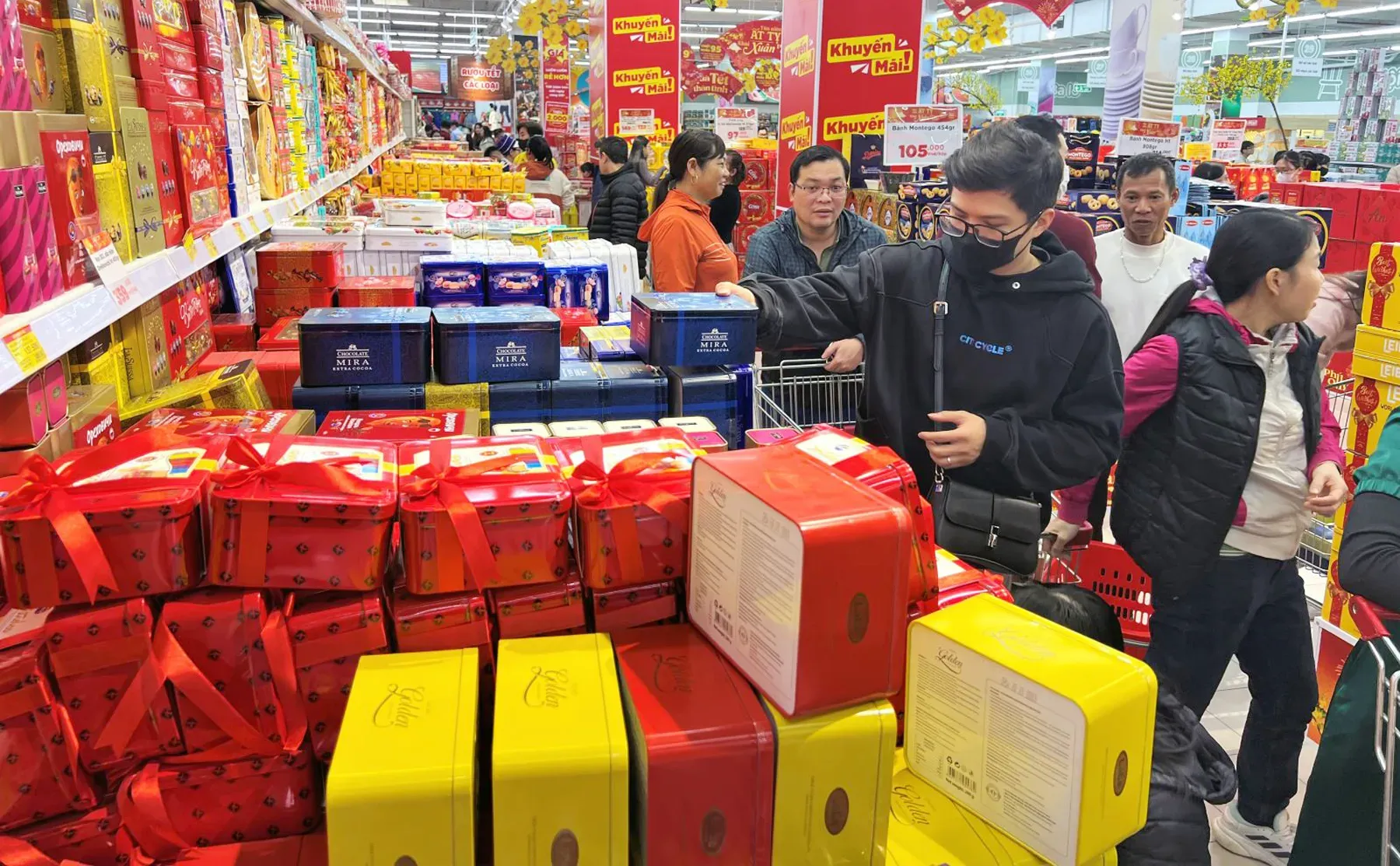
Notably, the fear of prices “skyrocketing” as the holiday approaches seems to have vanished. Thanks to early-activated market stabilization programs, prices for essential goods have remained steady. Specifically, live hog prices are maintained around 74,000 – 76,000 VND/kg, while pork cuts range from 130,000 to 160,000 VND (depending on type), ensuring supply for the increased demand in traditional food preparation during this period.
For the beer and beverage category, despite being in peak consumption season, selling prices have not only not increased but have seen many deep discount programs. This is a positive result from fierce competition among brands and the increasingly established habit of “not driving after drinking alcohol.”
Significantly, the 2026 Lunar New Year marks a clear turning point in gift-giving culture. Instead of lavish gift baskets focused on form with industrial sweets, consumers and businesses are strongly shifting towards the “Healthy Tet Gifts” trend.
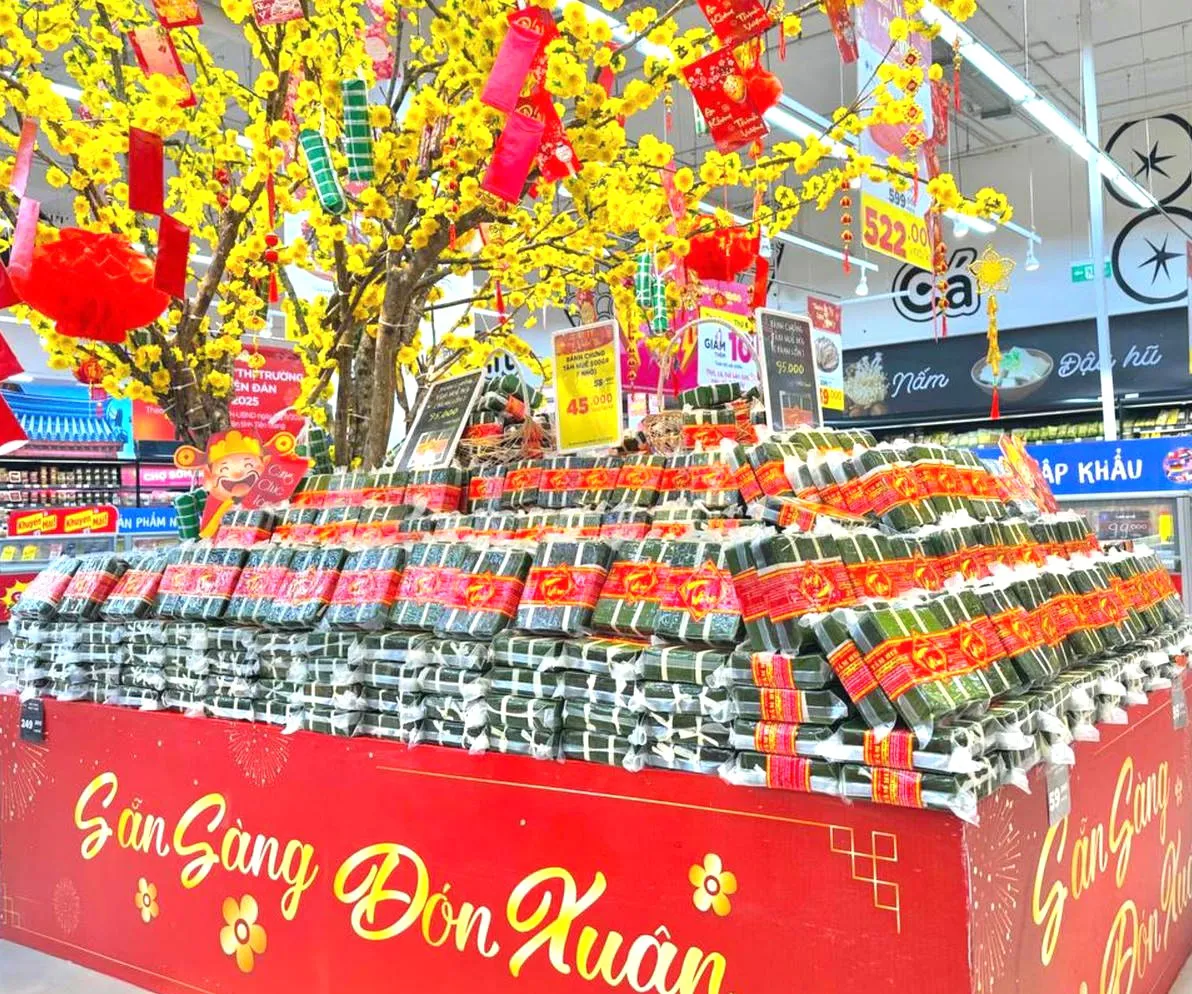
Gift sets combining OCOP agricultural products (regional specialties), organic food, nutritious nuts, and “Made in Vietnam” processed food lines are dominating the market. Tet gift baskets in the popular segment, priced from 300,000 to 500,000 VND, are selling the fastest at retail chains. Particularly, the rise of high-quality Vietnamese goods not only affirms the confidence of domestic consumers but also shows a sophisticated gift-choosing mindset, focusing on practical use value and the recipient’s health.
According to the Hanoi Department of Industry and Trade, the volume of goods businesses have prepared for the 2026 Lunar New Year includes: 301,050 tons of food grains; 60,210 tons of pork; 16,381 tons of beef; 16,726 tons of seafood; 334,600 tons of vegetables; 500 tons of candies and sweets…
To ensure stable supply, since early December 2025, the Department of Industry and Trade has guided production and business units to proactively seek supply sources in Hanoi and other provinces and cities, thereby building appropriate stockpiling plans.
Online Markets, Traditional Markets, Supermarkets “Race” to Sell
This year’s Tet goods market is bustling not only at supermarket and retail chain shelves but also exploding in the digital space. E-commerce platforms are fiercely “racing” in “Tet delivery” campaigns and 2-hour fast delivery, solving the time problem for busy urban residents.
Notably, Livestream selling continues to affirm its strength as agricultural product and Tet flower Mega-live sessions attract millions of views and close orders. The convenience of logistics and technology has increasingly blurred the line between traditional and online markets, forcing traditional retail channels to improve service quality to retain customers.
According to assessments from the Ministry of Industry and Trade, starting from the 16th day of the last lunar month, purchasing power has entered a strong growth phase, expected to increase 15-20% compared to normal days and will peak around the Kitchen Gods Day (the 23rd day of the last lunar month).
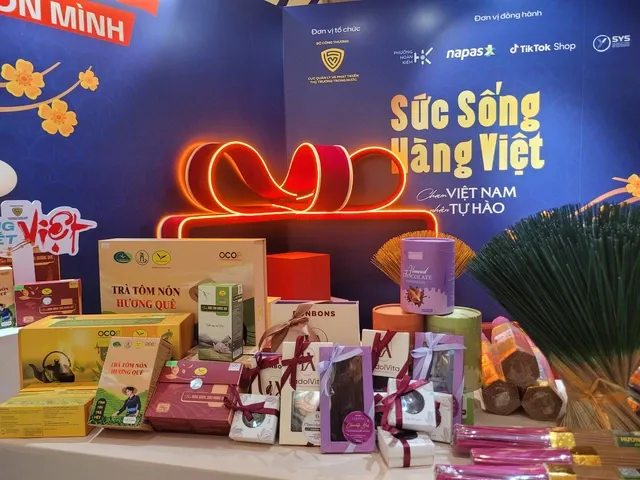
Information indicates: This year, for the first time, the development of a display and livestream space “Vitality of Vietnamese Goods” has been implemented, aiming to combine direct display of typical Vietnamese products, on-site sales, and sales on digital platforms. The activity takes place at 62 Trang Tien (H
![[Podcast] Trốn nghĩa vụ quân sự có thể bị phạt đến 75 triệu đồng](https://asiacity.news/wp-content/uploads/2025/08/tieu-chuan-suc-khoe-nghia-vu-quan-su-2024-17022820223812123762336-41-0-1265-1959-crop-1702282044778895511057-150x150.png)