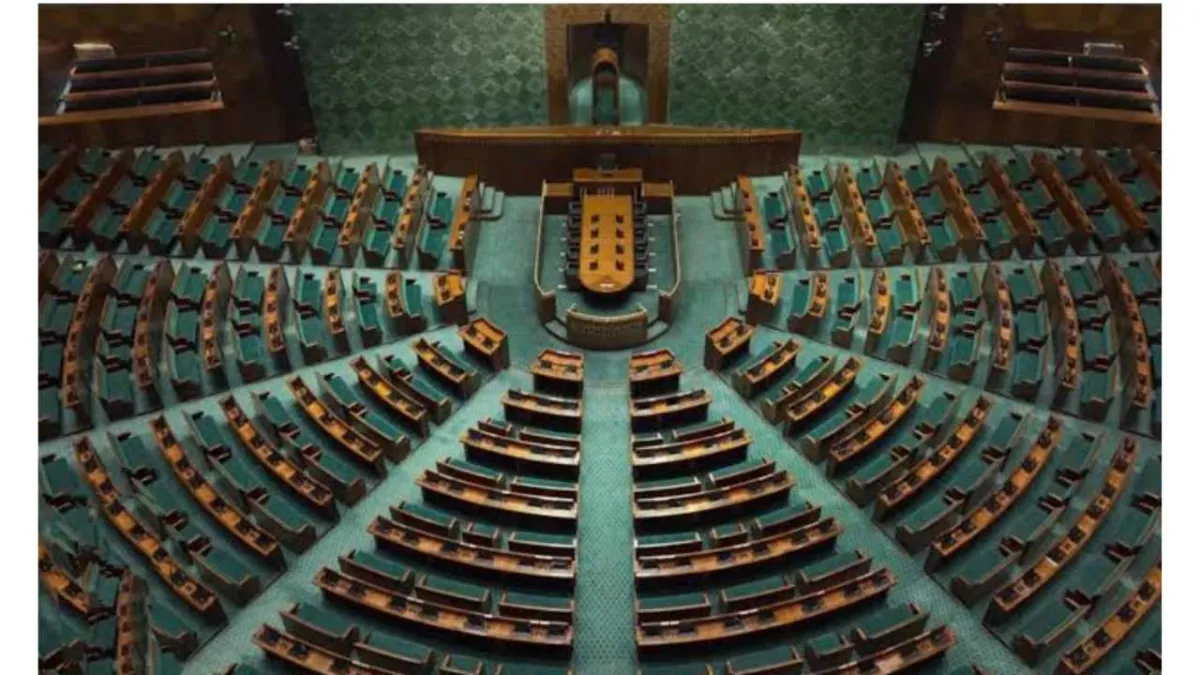
On Thursday, a massive uproar was witnessed in the Rajya Sabha when opposition parties raised an issue related to the Lok Sabha in the House.
The opposition claimed that the Leader of the Opposition in the Lok Sabha was not allowed to speak, and in protest, they raised the matter in the Rajya Sabha. However, the ruling party strongly objected to this.
The government stated that raising the proceedings of the Lok Sabha in the Rajya Sabha is against the rules, as the two Houses of Parliament function independently.
The Leader of the Opposition in the Rajya Sabha said in the House that the country’s democratic principles flow from Parliament, and Parliament means not just one House, but both the Lok Sabha and the Rajya Sabha. He cited the Constitution, stating that India has a bicameral system and both Houses hold equal importance.
Responding to this, the Minister of Parliamentary Affairs said that the opposition is deliberately adopting a strategy to disrupt the Prime Minister’s speech. He questioned what kind of politics this is and why this issue is being raised suddenly today. He said this is a calculated tactic by the opposition to stall the proceedings of the House.
Meanwhile, the opposition leader said that if the Leader of the Opposition in the Lok Sabha is being prevented from speaking, it is an attempt to silence not just one person but the entire opposition. He said the Leader of the Opposition wanted to speak on serious issues concerning the country and the international situation today but was not given the opportunity.
In response, the ruling party reiterated that the proceedings of the Lok Sabha cannot be discussed in the Rajya Sabha, and clear rulings on this have been given several times before by the Chair and the podium. The Minister of Parliamentary Affairs said on this subject that it is completely wrong to say that both Houses run together and that if one House is adjourned, the other automatically gets adjourned too.
He said if the opposition can show any rule stating that the Rajya Sabha adjourns as soon as the Lok Sabha adjourns, the government is ready to accept it. He clearly stated that both Houses of Parliament together constitute Parliament, but their proceedings and rules are separate. Regarding the Leader of the Opposition in the Lok Sabha, he said that he was given full time to speak.
Following this, the Finance Minister also spoke in the Rajya Sabha. She said she has full respect for the Leader of the Opposition in the Rajya Sabha, but some of the words used by him are not in keeping with parliamentary decorum. The Finance Minister specifically objected to the use of the word ‘lynching’ and said that making such remarks is not appropriate.
She said that if the talk is of lynching, it should also be remembered that an incident involving the murder of a tailor occurred during the Congress government in Rajasthan. She said such incidents happened during Congress rule, which are being questioned today. The ruling party and the opposition came face to face over this Lok Sabha issue.
Opposition MPs said that Parliament is the biggest platform of democracy and if the voice of the opposition is suppressed there, it is against democratic values. Other opposition MPs said they are protesting the fact that the Leader of the Opposition in the Lok Sabha was prevented from speaking on the country and the current situation.
Because of this, the noise and commotion in the House intensified, and the opposition staged a walkout. Throughout the entire episode, the atmosphere in the Rajya Sabha remained very noisy and chaotic.
On one side, the opposition kept talking about democracy, freedom of expression, and the rights of the opposition, while on the other side, the government cited rules, tradition, and parliamentary procedure to reject the opposition’s allegations.