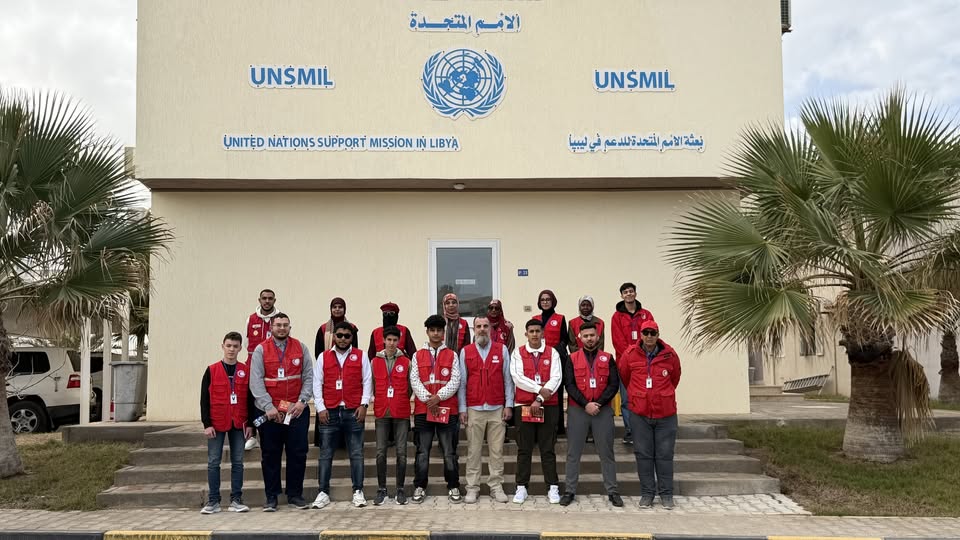
Tripoli – The United Nations Support Mission in Libya has concluded a specialized workshop it organized last week, targeting volunteers from the Libyan Red Crescent Society. The workshop aimed to enhance their capabilities in identifying dangerous weapons and explosive remnants of war, and to raise awareness within local communities about their risks. This contributes to reducing the accidents that continue to claim civilian lives across the country, particularly children.
Participants in the workshop confirmed that the training contributed to raising their level of preparedness to deal with the dangers of explosives and improved their ability to clearly convey awareness messages to residents, especially in areas affected by conflict remnants, where these weapons pose a constant threat to lives and property.
The Mission pointed to the urgent need to enhance community awareness efforts, given the recurrence of tragic accidents caused by remnants of war. It referred to a painful incident that occurred a few days before the workshop was held, involving the death of a boy and his brother being blinded after they handled a hand grenade inside a residential area in the city of Misrata. This incident reflects the scale of the danger posed by the spread of explosives within civilian neighborhoods.
According to the United Nations Mine Action Service, 484 victims of explosions have been recorded in Libya since May 2020, including 174 fatalities, among them 19 children. This highlights the continuing threat posed by unexploded ordnance and remnants of war to civilian safety.
In this context, it was stated that organizations like the Libyan Red Crescent Society play a pivotal role in directly reaching families within their communities. It was emphasized that enhancing these organizations’ capabilities to identify risks and communicate about them effectively is one of the most effective ways to prevent further loss of life.
It was added that investing in building community awareness and field training remains an essential element in protecting civilians, supporting stability, and reducing the long-term humanitarian impacts of the conflict in Libya.