Riding the trend, accelerating production expansion.
A second-generation entrepreneur from Shenzhen has struck it rich.
In mid-January, Biwin Storage announced an estimated net profit of 8.5 to 10 billion yuan for 2025, representing a year-on-year increase of 4 to 5 times. In the first half of the year, the company had actually reported a loss of over 200 million yuan.
The 38-year-old Chairman, Sun Chengsi, led the team to a remarkable turnaround, generating over 1 billion yuan in profit in just six months.
Biwin operates in the memory chip business. Sun personally holds a 17.69% stake. He was only 27 years old when he took over the company from his father.
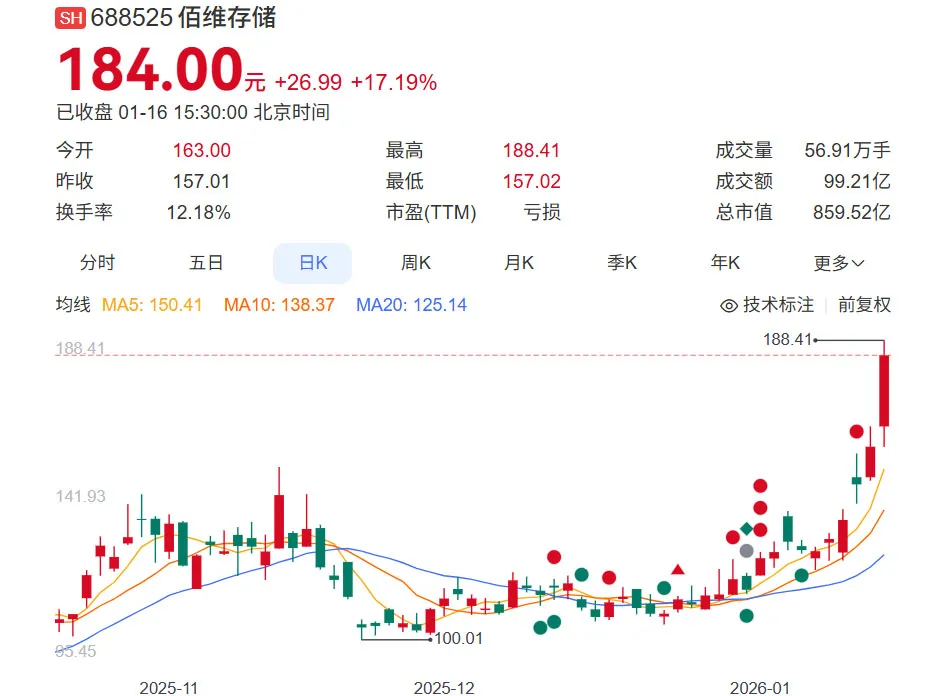
Now, Biwin is benefiting from an upward industry cycle and has caught the tailwind of on-device AI. At the close on January 16th, its market capitalization was approximately 86 billion yuan.
This vigorous leader is now pushing for an IPO in Hong Kong, aiming to expand and strengthen the foundation built by his father’s generation. Biwin is currently one of the few integrated R&D and packaging/testing storage providers globally.
“The effects might not be visible in the short term, but in the long run, having your own proprietary processes undoubtedly creates a different level of competitiveness,” commented an industry professional in the memory chip sector.
Earning Tens of Millions Daily
Sun Chengsi’s memory business is certain to surpass 10 billion yuan in annual revenue.
The explosive profit occurred in the final three months of 2025. The estimated net profit for that quarter is between 8.2 and 9.7 billion yuan. Calculating based on the upper limit, this averages out to daily earnings of 10.54 million yuan.
In its announcement, Biwin Storage mentioned a “U-shaped” curve.
The prices of its memory products began declining quarter by quarter starting from Q3 2024, bottoming out in Q1 2025, and then began recovering in Q2, gradually boosting sales revenue and gross margin.
Sun Chengsi encountered a rather rare and significant price surge.
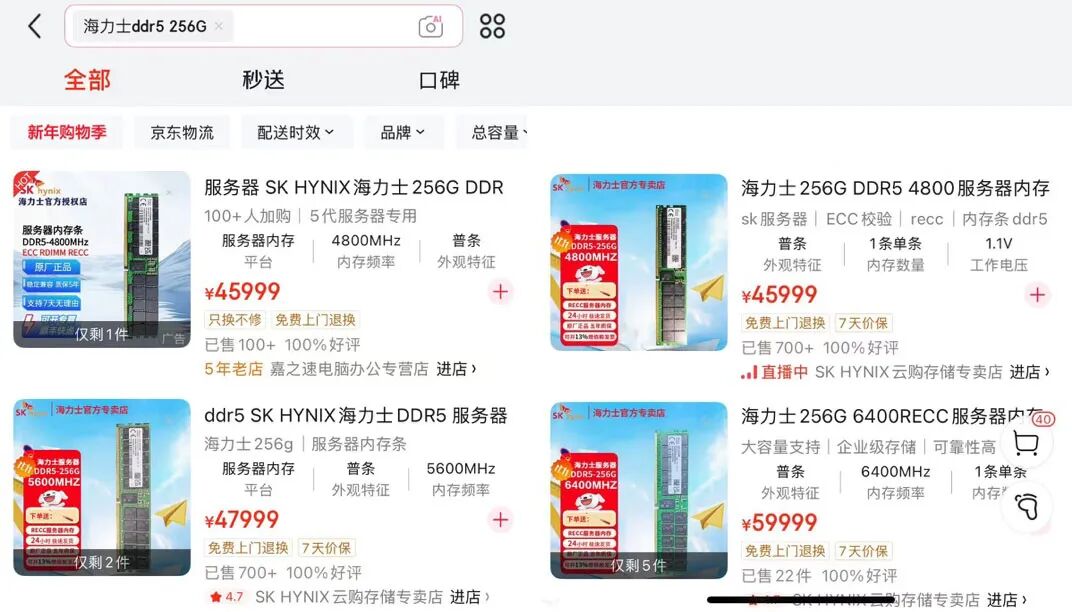
A search on JD.com for SK Hynix 256G DDR5 memory modules shows unit prices mostly above 45,000 yuan. A box of 100 such modules could be equivalent to the price of an apartment in Beijing or Shanghai.
The source of the price increase lies in AI driving up memory demand. More specifically, it stems from three layers: AI inference, on-device AI, and emerging AI applications.
Biwin Storage, under Sun Chengsi’s leadership, has corresponding products in all these areas, which are being rapidly introduced to the market.
For example, in the field of embodied intelligence, when robots perform tasks like environmental perception and motion control, they must quickly store and read data, creating specific demands for memory chips with high bandwidth, low latency, and large capacity.
According to teardown reports, Unitree’s Go2 intelligent robotic dog uses Biwin Storage’s LPDDR4X and eMMC storage products.
In mainstream application areas like mobile phones, PCs, and smart wearables, many well-known brand products have Biwin behind them, such as Lenovo and Xiaomi.
Sun Chengsi also operates the self-owned brand “Biwin,” selling SSDs and memory modules directly.
During the 2025 Double Eleven shopping festival, on the JD.com platform, many of Biwin’s products were shown as sold out or with purchase limits. The company explained at the time that “consumer willingness to place orders was strong, leading to a surge in purchase quantities.”
“In the past, we also misunderstood AI, seeing it only as a more advanced search engine,” Sun Chengsi said. With large model technology rapidly landing in mobile phones, PCs, and wearable devices, it has become increasingly clear that AI is no longer distant.
Following in His Father’s Footsteps
Sun Chengsi has served as Chairman of Biwin for 11 years. Having grown from a newcomer to a veteran, he is still