It was stated that many professions existed during the time of the Prophet and were an integral part of his religion and law. There were teachers, translators, doctors, real estate notaries, ministers, ambassadors, builders, economists, guild masters, blacksmiths, and various other professions.
Minister of Endowments: Poverty is our greatest enemy… and development is its only cure
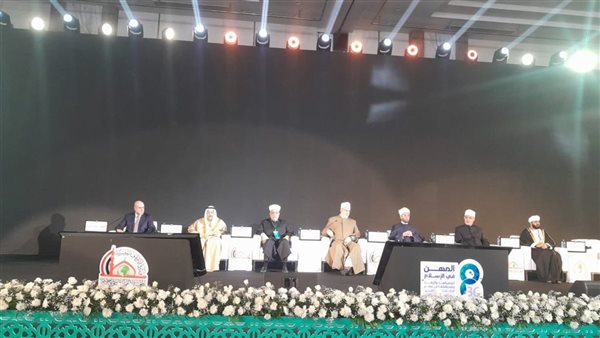
It was further stated in a speech delivered on behalf of the Prime Minister at the 36th International Conference of the Supreme Council for Islamic Affairs, titled “Professions in Islam,” that this achieves what we all believe is guaranteed by the noble Islamic law: combating and opposing poverty. This is based on the saying, “O Allah, I seek refuge in You from disbelief and poverty.” It was clarified that poverty is our greatest enemy, and its only cure is development, crafts, and professions. This achieves what we all believe is the objective of the noble Islamic law: attaining wealth, and that the true religious discourse calls for the creation of wealth, sufficiency, and prosperity.
It was added that eminent scholars have undertaken the task of documenting the aspect of development in the Prophetic guidance. The great and unique book, “Takhrij al-Dalalat al-Sam’iyyah ‘ala ma kana fi ‘ahd Rasul Allah min al-hiraf wa al-sana’i’ wa al-‘amalat al-shar’iyyah,” was authored, tracing the professions during the Prophetic era to reveal to us the extent of the Prophet’s care for crafts and professions in his time. It has been published here by the Ministry of Endowments’ Supreme Council for Islamic Affairs.
The 36th International Conference of the Supreme Council for Islamic Affairs was inaugurated. It is scheduled to be held on the 19th and 20th of this month in Cairo, under the title: “Professions in Islam: Their Ethics, Impact, and Future in the Age of Artificial Intelligence.”
Prophet
“Prophet” most likely refers to **The Prophet’s Mosque (Al-Masjid an-Nabawi)** in Medina, Saudi Arabia. It is the second holiest site in Islam, originally built by the Prophet Muhammad himself in 622 CE after his migration from Mecca. The mosque has been significantly expanded over the centuries and now serves as a major pilgrimage site, housing his tomb.
Ministry of Endowments
The Ministry of Endowments (often called *Awqaf*) is a governmental body common in many Muslim-majority countries, primarily responsible for managing religious endowments (*waqf*). Historically, the *waqf* system dates back to the early Islamic period, providing perpetual charitable funding for mosques, schools, hospitals, and public welfare. Today, such ministries typically oversee religious affairs, maintain Islamic sites, and administer charitable assets in accordance with Islamic law.
Supreme Council for Islamic Affairs
The Supreme Council for Islamic Affairs is a governmental or state-appointed body found in several Muslim-majority countries, such as Egypt and Malaysia. Its primary role is to oversee and regulate Islamic religious matters, including mosques, religious education, and the issuance of fatwas (religious edicts). Historically, such councils were often established in the 20th century as part of state efforts to centralize religious authority and promote a particular interpretation of Islam aligned with national policy.
Takhrij al-Dalalat al-Sam’iyyah ‘ala ma kana fi ‘ahd Rasul Allah min al-hiraf wa al-sana’i’ wa al-‘amalat al-shar’iyyah
This is a classical Islamic legal work by the 14th-century scholar Ibn Khaldun. It examines the various professions, crafts, and lawful commercial activities that existed during the time of the Prophet Muhammad. The text serves as an important historical and economic source, detailing the social and occupational structure of early Islamic society.
36th International Conference of the Supreme Council for Islamic Affairs
The 36th International Conference of the Supreme Council for Islamic Affairs is not a permanent place or cultural site, but a significant event. It is a major conference organized by Egypt’s Al-Azhar institution, one of the world’s oldest and most prestigious centers of Islamic learning, typically focusing on contemporary issues facing Muslim communities globally. These conferences are part of Al-Azhar’s modern role in promoting moderate Islamic discourse and interfaith dialogue.
Cairo
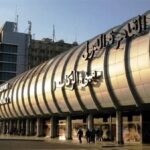
Cairo is the sprawling capital of Egypt, founded in 969 CE by the Fatimid dynasty near ancient sites like the Pyramids of Giza. It is a historic center of the Islamic world, famed for landmarks such as the medieval Cairo Citadel and the Al-Azhar Mosque and University. Today, it remains a vibrant, bustling metropolis blending its rich Pharaonic, Coptic, and Islamic heritage with modern urban life.