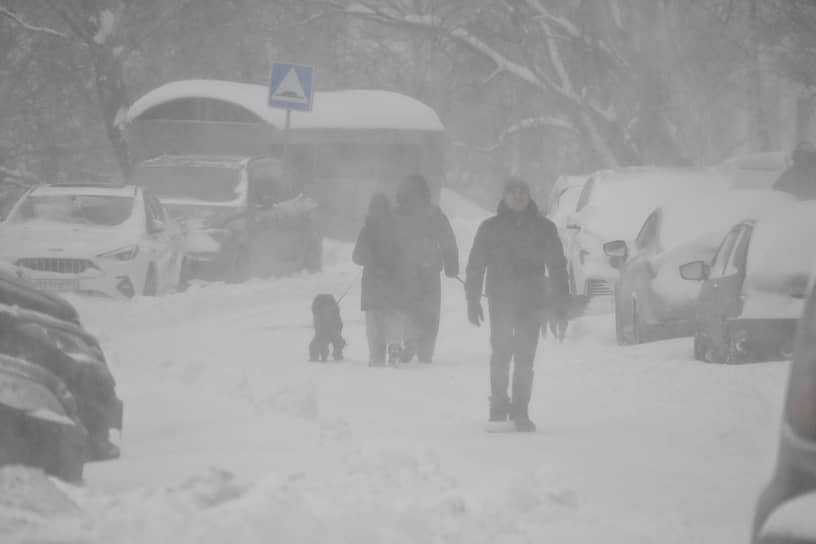
Yesterday, Moscow experienced its heaviest snowfall in the last 50 years, with 42% of the monthly precipitation norm falling within 24 hours.
The snow cover depth in the capital reached 39 cm. The precipitation that fell on January 9th broke the record from 1976, when 12.9 mm of precipitation was recorded in the city. It was just 1 mm short of breaking the all-time January record, which has stood since 1970. “In other words, Moscow has not seen such a snowy Armageddon in mid-winter for the last 56 years!”
The deepest snowdrifts formed in Balchug and Tushino. In the Moscow region, the snow cover depth reached 51 cm. Record snowfall amounts were recorded in Cherusti, Mikhaylovskoye, and Serpukhov.
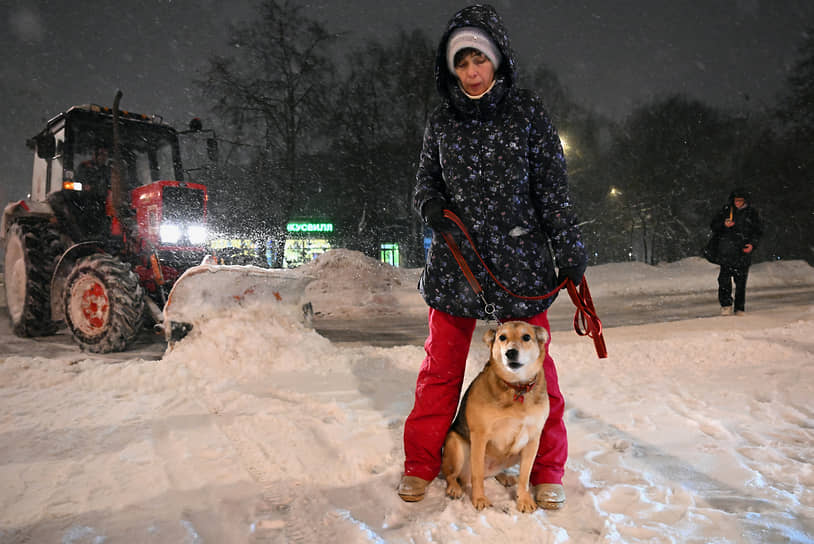
Moscow
Moscow is the capital and largest city of Russia, with a history dating back over 800 years to its first recorded mention in 1147. It grew from a medieval fortress, the Kremlin, into the political and cultural heart of the Russian state, serving as the capital of the Tsardom of Russia, the Soviet Union, and the modern Russian Federation. Today, it is a global metropolis renowned for iconic landmarks like Red Square, St. Basil’s Cathedral, and its vast museums and theaters.
Balchug
Balchug is a historic district and island in central Moscow, Russia, situated between the Moskva River and its old channel, the Vodootvodny Canal. Historically, it was a low-lying, often flooded area known for its warehouses, merchant activity, and taverns from at least the 16th century. Today, it is a prominent business and commercial zone, home to modern skyscrapers like the Moscow International Business Center (“Moscow-City”).
Tushino
Tushino is a historic district in northwestern Moscow, Russia, best known for the “Tushino Airfield,” a major center for Soviet aviation and paratrooper training from the 1930s. Its earlier history dates to the 16th century, and it was notably the site of a military camp for the False Dmitry II during the Time of Troubles in the early 1600s. Today, it is a residential area with parks and the preserved airfield serving as a public space and memorial to its aviation heritage.
Cherusti
Cherusti is a small rural settlement in Moscow Oblast, Russia, historically known as a village. Its primary cultural significance stems from the **Cherusti Railway Station**, a preserved wooden station building from the late 19th century that served the Moscow–Ryazan line and is considered an architectural monument of its era. While the village itself is quiet, the station stands as a historical reminder of the region’s development during the age of the Russian railways.
Mikhaylovskoye
Mikhaylovskoye is a historic estate in western Russia, best known as the family home and place of exile for the great Russian poet Alexander Pushkin in the 1820s. It was here that he wrote some of his most famous works, including parts of *Eugene Onegin*. Today, it is a revered museum-reserve dedicated to his life and literary legacy.
Serpukhov
Serpukhov is a historic city in Moscow Oblast, Russia, founded in 1339 as a key fortress protecting the southern approaches to Moscow. It later grew as a significant trade and religious center, most notably as the home of the Vysotsky Monastery, established in 1374. Today, it is an industrial city that preserves several important historical and architectural monuments from its medieval past.