Atop the Great Wall, Wishes Shared: The 32nd Mutianyu Great Wall New Year’s Day Sunrise Viewing Event Held
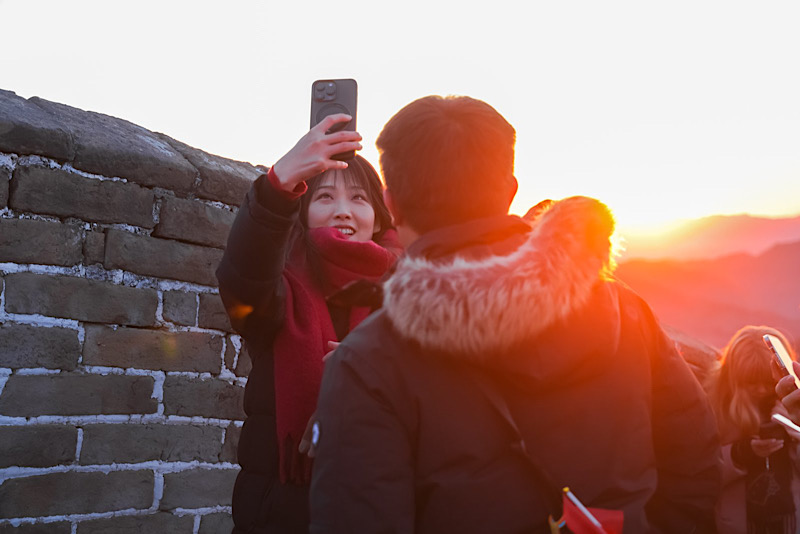
The “First Light of Mu, Grand Opening of Enterprise” — the 32nd Mutianyu Great Wall New Year’s Day Sunrise Viewing Event was held as scheduled. Nearly a thousand visitors gathered on-site to welcome the first rays of dawn of the new year, kicking off a brand new chapter for 2026 amidst a cultural feast blending tradition and modernity.
It is understood that the New Year’s Day sunrise viewing event, as one of the signature activities of the Mutianyu Great Wall, has been held for over thirty years. With its unique charm and rich cultural significance, it has attracted countless visitors to participate and witness the magnificent sight of the new year’s first sunlight shining upon the ancient Great Wall. “This is my second time coming here to celebrate the New Year’s transition. You can’t find this sense of ceremony anywhere else,” one visitor said with a smile.
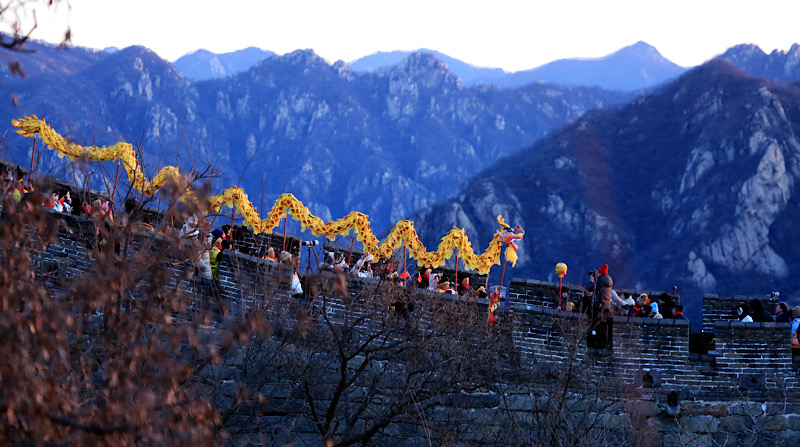
Around 6 a.m., the event commenced with spirited red songs and drum performances, with visitors singing in unison led by professional vocal guides. Subsequently, a series of distinctive performances took the stage one after another: agile intangible cultural heritage dragon and lion dances weaved through the Great Wall, showcasing the charm of traditional arts; futuristic robot dances formed a striking contrast with the ancient battlements; and the melodious tunes of Huangmei opera echoed through the mountain valleys. The event site also featured a “God of Wealth” blessing station, warm ginger and jujube tea service, and a dedicated prayer area, fully immersing everyone in the festive atmosphere.
As one of the highlights of this event, a dragon and lion dance team composed of individuals with disabilities from Wuxi, Jiangsu province, once again took to the Great Wall stage. After moving countless audiences in 2025, they returned to the Great Wall this year with even more refined skills and full enthusiasm, dancing upon the ramparts to showcase the vitality of life and the inheritance of culture.
As the sky gradually brightened, visitors followed the dragon and lion dance procession in a slow ascent up the wall. Around 7:35 a.m., a throat singing (Khoomei) performance from Siziwang Banner, Inner Mongolia, began precisely. The deep and distant sounds of Khoomei arrived in sync with the rising sun in the east, creating a perfect resonance between ancient art and a natural wonder. “That moment was truly magical!” one visitor remarked. “The sound of Khoomei seemed to come from deep within the earth, just as the sun rose exactly over the mountain ridge. The combination of that ancient sound and the natural spectacle felt incredibly beautiful.”
Following the sunrise viewing event, the 2026 “Celebrate the New Year in Huairou” Winter Culture and Tourism Press Conference, hosted by the Huairou District Culture and Tourism Bureau, commenced amidst the powerful beats of drums and the magnificent backdrop of the Great Wall sunrise. Using ice and snow as the medium and the spirit of the Lunar New Year as its soul, the press conference, through government-enterprise collaboration, regional coordination, and online-offline integration, launched a series of winter cultural tourism products, themed itineraries, and public benefit initiatives, comprehensively unlocking new winter tourism experiences in Huairou.
“In the new year, we will continue to enhance service quality and deeply integrate diverse resources to create richer, higher-quality, and more distinctive cultural and tourism experiences for visitors,” a relevant person in charge stated.
Mutianyu Great Wall
The Mutianyu Great Wall is a well-preserved section of the Great Wall of China located in Huairou District, Beijing, originally constructed in the mid-6th century during the Northern Qi dynasty and later rebuilt and strengthened in the early Ming dynasty (around 1404) for military defense. Today, it is a major tourist attraction renowned for its scenic mountain views, watchtowers, and the option to descend via a thrilling toboggan slide.
Huangmei opera
Huangmei opera is a major form of Chinese opera originating from the Huangmei region of Hubei province, with its roots in 18th-century folk songs and dances. It gained national prominence in the mid-20th century, particularly through classic works like *The Heavenly Maid and the Mortal*. Known for its lyrical and accessible singing style, it often features romantic stories and simple, melodic tunes.
dragon and lion dances
Dragon and lion dances are traditional Chinese performances often seen during Lunar New Year and other festive celebrations, believed to bring good luck and ward off evil spirits. With origins dating back over a thousand years to the Han Dynasty, the lion dance is associated with martial arts folklore, while the longer dragon dance, involving multiple performers, symbolizes power, wisdom, and prosperity. Both are vibrant displays featuring rhythmic drumming and elaborate costumes, deeply rooted in Chinese cultural and religious history.
robot dances
“Robot dances” refer to a style of street dance that originated in the late 1960s and 1970s, popularized by performers like Charles “Robot” Washington and later by Michael Jackson’s “robot” moves. It involves imitating the stiff, mechanical movements of a robot through isolated pops and locks, often to funk or electronic music. This dance form became a foundational element of hip-hop and funk styles, showcasing creativity through mechanical illusion.
Khoomei
Khoomei, also known as Tuvan throat singing, is a traditional musical art form originating from the nomadic peoples of Central Asia, particularly Tuva in southern Siberia. It is characterized by a single performer producing multiple harmonic tones simultaneously, often mimicking natural sounds like wind, water, and animals. Historically, it has been practiced for centuries as part of spiritual rituals, storytelling, and a deep connection to the surrounding landscape.
Siziwang Banner
Siziwang Banner is a county-level administrative region located in Ulanqab, Inner Mongolia, China. Historically, it was part of the traditional grazing lands of Mongolian herders and is named after the “Siziwang” Mongol tribe. Today, it is known for its grasslands, agriculture, and cultural heritage tied to Inner Mongolia’s ethnic traditions.
Huairou District
Huairou District is a suburban district of Beijing, China, known for its mountainous scenery and as a gateway to sections of the Great Wall, including the popular Mutianyu and Jiankou segments. Historically, it has been an important defensive area for the capital and, in the modern era, it gained international prominence as the host site for the 1995 United Nations Fourth World Conference on Women. Today, it serves as a major ecological conservation area and a recreational destination for both Beijing residents and tourists.
Great Wall
The Great Wall of China is an ancient series of fortifications built across the northern borders of historical Chinese states and empires, primarily to protect against nomadic invasions. Its construction began as early as the 7th century BC, with the most famous sections built during the Ming Dynasty (1368–1644). Today, it stands as a UNESCO World Heritage site and a powerful symbol of Chinese civilization and engineering.