Chairperson of the African Union Commission: The departure of General Haddad and his comrades is a great loss for Libya and the entire region.
Addis Ababa – The Chairperson of the African Union Commission, Mahmoud Ali Yousif, described the passing of the Chief of the General Staff of the Libyan Army, Major General Mohammed Al-Haddad, and his companions as “a great loss not only for Libya but for the entire region.”
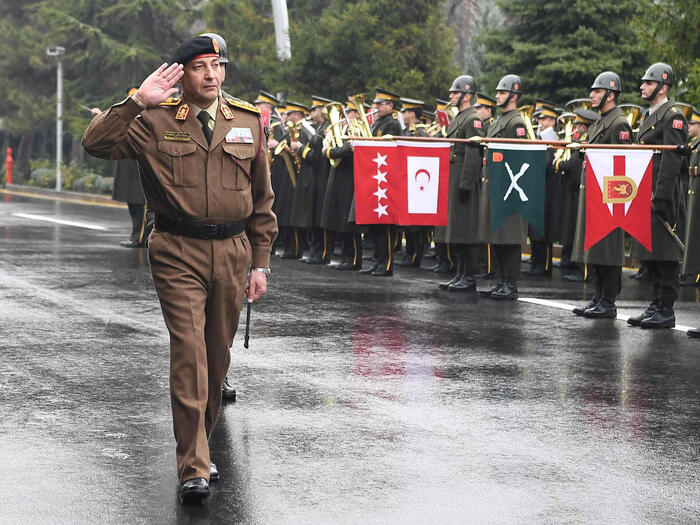
The African Union said in a statement issued on Thursday that the Chairperson of the Commission, Mahmoud Ali Yousif, received “with profound sadness and sorrow the news of the tragic accident that claimed the life of the Chief of the General Staff of the Libyan Army, Major General Mohammed Al-Haddad, and four of his accompanying officers, while they were returning from an official trip from Ankara.”
The statement added that, according to the text of the condolence message, Ali Yousif extended his sincere condolences to the Libyan authorities and people, and to the families of all the victims of this national tragedy, expressing his full solidarity with the Libyan Armed Forces in facing this immense loss.
The Chairperson of the African Union Commission praised the Libyan authorities for their continuous efforts in promoting peace, stability, and security in Libya and the region.
Mahmoud Ali Yousif affirmed the African Union’s support for the Libyan government and people during this difficult time, praying for patience, strength, and peace for all the affected families.
Addis Ababa
Addis Ababa is the capital and largest city of Ethiopia, founded in 1886 by Emperor Menelik II. It serves as the political and diplomatic heart of Africa, hosting the headquarters of the African Union and the United Nations Economic Commission for Africa. The city’s history is reflected in sites like the National Museum, home to the famous fossil “Lucy,” and the Holy Trinity Cathedral.
African Union
The African Union (AU) is a continental organization established in 2002, succeeding the Organization of African Unity (OAU) founded in 1963. Its primary aims are to promote unity, peace, and development across Africa, while addressing challenges like conflict and poverty. The AU is headquartered in Addis Ababa, Ethiopia, and plays a key role in coordinating political and economic cooperation among its 55 member states.
Libya
Libya is a North African country with a rich history shaped by ancient civilizations like the Phoenicians and Romans, notably seen at the UNESCO site of Leptis Magna. In the modern era, it was an Italian colony before gaining independence in 1951 and was ruled by Muammar Gaddafi from 1969 until the 2011 revolution. Its cultural heritage includes well-preserved Greco-Roman ruins and historic desert trading posts, though recent conflicts have posed challenges to its preservation.
Ankara
Ankara is the capital city of Turkey, located in the central Anatolia region. While its history dates back to ancient civilizations like the Hittites, it is most famously known for being chosen by Mustafa Kemal Atatürk as the center of the Turkish War of Independence in the 1920s, leading to its designation as the capital of the Republic of Turkey in 1923. Today, it is a major modern city and political hub, home to landmarks like the Anıtkabir, Atatürk’s mausoleum.
Libyan Army
The Libyan Army, originally established after Libya’s independence in 1951, has been a central institution in the nation’s modern history. It was significantly expanded and politicized under Muammar Gaddafi’s rule (1969-2011) and, following the 2011 revolution, fragmented into competing factions aligned with rival governments in the east and west. Today, it remains divided, reflecting the country’s ongoing political and military instability.