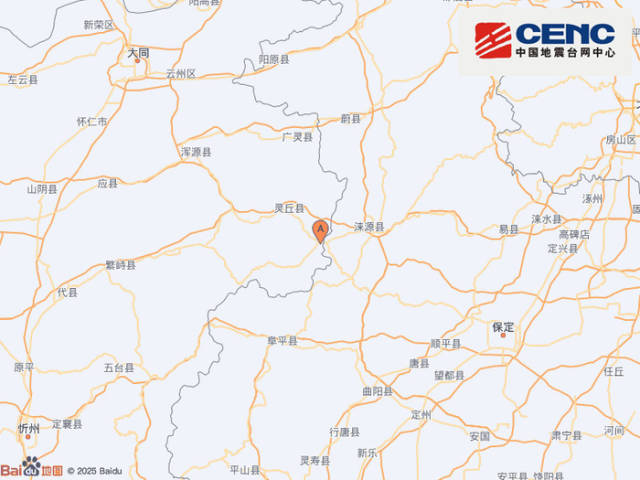
According to official measurements from the China Earthquake Networks Center, a magnitude 4.2 earthquake occurred in Lingqiu County, Datong City, Shanxi Province (39.32°N, 114.39°E) at 20:31 on December 22. The focal depth was 8 kilometers.
Lingqiu County
Lingqiu County is a historic county located in Shanxi Province, northern China, with a history dating back over 2,000 years to the Han Dynasty. It is known for its strategic location along ancient frontier routes and its well-preserved section of the Great Wall from the Northern Wei and Ming dynasties. The area is also recognized for its traditional cave dwellings and its role in the historic Pingxingguan Pass, a site of a significant battle during the Second Sino-Japanese War.
Datong City
Datong is a historic city in northern Shanxi Province, China, renowned as the ancient capital of the Northern Wei Dynasty (386-535 AD). It is most famous for the UNESCO World Heritage Site of the Yungang Grottoes, a spectacular collection of 5th-century Buddhist cave temples carved into cliffsides. The city also features the well-preserved Ming-era Datong City Walls and the unique Hanging Temple (Xuankong Si) built into a mountainside.
Shanxi Province
Shanxi Province in northern China is a cradle of ancient Chinese civilization, historically serving as a vital political, economic, and cultural center for centuries. It is renowned for its exceptionally well-preserved historical sites, including the Yungang Grottoes (a UNESCO World Heritage Site with 5th-century Buddhist carvings) and the ancient city of Pingyao. The province is also famous for its unique merchant culture from the Ming and Qing dynasties and its profound influence as the homeland of Jin opera.
China Earthquake Networks Center
The China Earthquake Networks Center (CENC) is the national institution responsible for monitoring seismic activity, issuing earthquake warnings, and conducting research across mainland China. Established in 1971 and later restructured, it operates under the China Earthquake Administration, utilizing a vast network of stations to collect and analyze data. Its work is crucial for disaster preparedness and understanding the seismic risks in a region prone to significant earthquakes.