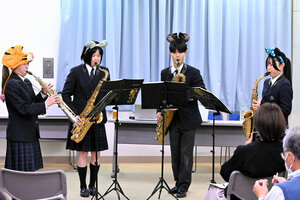
A “Journalist Salon” event was held on November 27th, with the theme of wind band music. The discussion covered the “behind-the-scenes” of composition and contest judging, as well as what constitutes a “good performance.”
――How did you first get involved with wind bands?
I joined the wind band club in high school because I wanted them to play my compositions. I’ve enjoyed drawing on music manuscript paper since elementary school and started taking composition lessons in junior high. We would finish lunch quickly, gather in the library with two composition friends, and show each other our pieces. We’d say things like, “Your melody is lame.” I still remember my friend’s tunes.
――What music was commonly performed back then?
It was mostly scores from American publishers, like works by Alfred Reed. For Japanese compositions, I think the only sheet music available was the set pieces for the All Japan Band Competition and marches played by military bands before and during the war.
――When was your first wind band piece published?
In 1999, a person from a newly established music publisher asked if I had any spare scores lying around at home. I handed over a lot, along with two other composers. That was the first time.
After that, commissioned works increased significantly. I often write pieces based on requests like, “Our saxophone section is strong, so write something that showcases them.” These pieces also started to be performed a lot in competitions.
However, I feel that judging methods have been changing recently, and the trends in free-choice pieces have also shifted.