With Colleague in Ambulance, Bengal Election Officials Stage Protest Over SIR
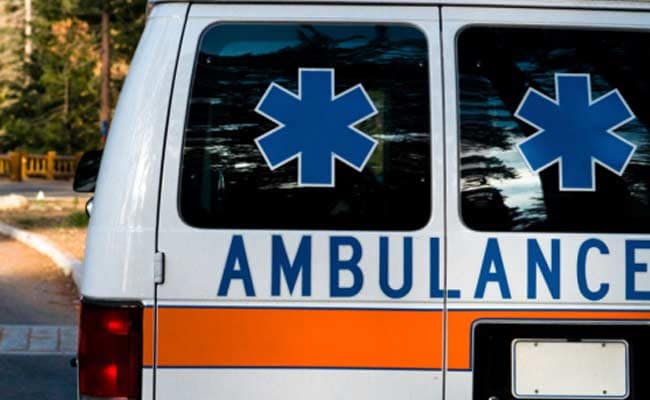
Protestors brought the ailing 57-year-old BLO in an ambulance to the CEO’s office.
Kolkata:
An association of West Bengal’s Booth Level Officers staged a protest outside the Chief Electoral Officer’s office, bringing a BLO in an ambulance and claiming he suffered a severe brain stroke due to excessive stress during Special Intensive Revision duties.
A BLO from a booth in the South 24 Parganas district reportedly collapsed last week after a sudden increase in workload during the ongoing electoral revision exercise.
Protestors brought the ailing 57-year-old BLO in an ambulance to the CEO’s office, alleging that the Election Commission has “not paid a single rupee” in compensation so far.
Leaders of the BLO Adhikar Raksha Committee claimed they are under “tremendous pressure” to meet deadlines for the ongoing Special Intensive Revision of electoral rolls.
“We want adequate compensation and immediate relief from the unbearable workload imposed on BLOs,” a committee member said.
They cited instances where the state government had extended compensation to polling personnel who died or were injured in the line of duty, arguing that similar support should be ensured for BLOs who fall ill during Election Commission-assigned work.
“The state government provides ex-gratia for election-duty casualties. Why is the EC denying basic compensation to BLOs who suffer health damage while performing mandatory duties?” the protestors questioned.
West Bengal
West Bengal is a state in eastern India with a rich cultural history, most notably as the center of the Bengali Renaissance—a 19th-century social and cultural reform movement. Its capital, Kolkata, served as the capital of British India until 1911 and remains a major hub for literature, art, and intellectual thought. The region is also famous for its distinctive traditions in music, cinema, and festivals like Durga Puja.
Chief Electoral Officer’s office
The Chief Electoral Officer’s office is a key administrative institution responsible for overseeing and conducting elections in a country or region, such as Canada. Historically, such offices were established to ensure the impartiality and integrity of the electoral process, often evolving from less formal systems to become independent bodies that manage voter registration, enforce campaign finance laws, and certify election results.
South 24 Parganas district
South 24 Parganas is a district in the Indian state of West Bengal, primarily known for its vast part of the Sundarbans mangrove forest, a UNESCO World Heritage Site. Historically, it was formed from the southern portion of the larger Parganas district during British rule, and its riverine geography has long supported agriculture, fishing, and trade. The area is culturally significant for its mix of Bengali traditions and is a critical habitat for the Royal Bengal Tiger.
Election Commission
The Election Commission is an independent governmental body responsible for administering and overseeing the democratic electoral process in a country. Its history is tied to the development of modern representative democracy, with many established in the 19th or 20th centuries to ensure free and fair elections, manage voter registration, and enforce electoral laws. By operating impartially, it serves as a fundamental institution for upholding the integrity of a nation’s political system.
BLO Adhikar Raksha Committee
The BLO Adhikar Raksha Committee is not a historical or cultural site, but a contemporary advocacy group. It is a civil society organization in India, primarily in West Bengal, formed to protect the rights and address the grievances of Booth Level Officers (BLOs)—government-appointed election workers. Its history is rooted in recent decades, emerging from efforts to secure better working conditions and legal recognition for these electoral personnel.
Special Intensive Revision
“Special Intensive Revision” does not refer to a specific place or cultural site. It is a phrase typically used to describe an educational program or study period focused on concentrated review, often before an exam. Therefore, it has no geographical location or historical significance as a cultural landmark.
electoral rolls
“Electoral rolls” are not a specific place or cultural site, but rather official lists or registers of people eligible to vote in a particular area. Their history is tied to the development of democratic systems, evolving from limited lists (often based on property ownership or gender) to more comprehensive registers intended to include all adult citizens. Maintaining accurate rolls is a foundational administrative task for conducting elections in representative democracies.
state government
A state government is the administrative body responsible for governing a specific subnational region (a state) within a federal system, such as in the United States, Australia, or India. Its history is rooted in federalist principles, where power is constitutionally divided between a central national government and these regional entities, allowing states to manage local affairs like education, transportation, and law enforcement. This structure often originated from historical agreements or constitutions that united formerly separate colonies or territories into a single nation.