The world’s brightest minds gathered in Nagoya. A discussion forum was held featuring two Nobel Prize laureates.
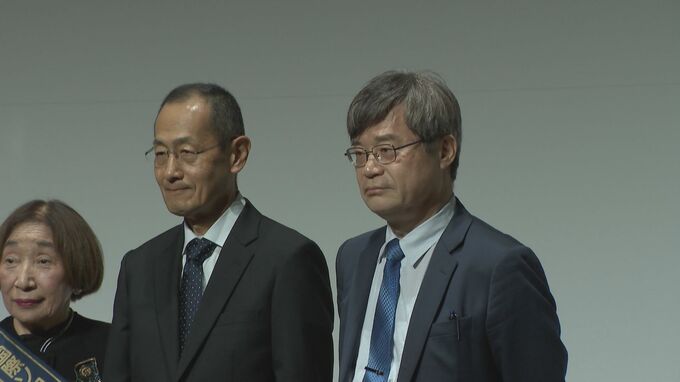
The event at Chubu Building featured the 2012 Nobel Prize in Physiology or Medicine winner for iPS cell research and the 2014 Nobel Prize in Physics winner for blue LED development.
The event was organized by an international women’s empowerment organization, featuring lectures on iPS cell research progress and a discussion forum with both researchers.
An iPS cell exhibition was also held, where participants could be seen looking through microscopes.
Nagoya
Nagoya is a major city in central Japan, historically known as the seat of the powerful Owari Tokugawa clan during the Edo period. Its most famous cultural site is Nagoya Castle, a symbol of the city built in the early 17th century, though the current main keep is a modern reconstruction. The city is also a prominent industrial and economic hub, home to companies like Toyota.
Chubu Building
The Chubu Building is a historic office building located in Nagoya, Japan, completed in 1994. It is notable for its postmodern architectural style and was developed as part of the city’s urban redevelopment efforts in the late 20th century. The building serves as a commercial hub in the Nagoya business district.
Nobel Prize in Physiology or Medicine
The Nobel Prize in Physiology or Medicine is one of the five Nobel Prizes established by the will of Alfred Nobel in 1895. It has been awarded annually since 1901 for groundbreaking discoveries in the life sciences and medicine, honoring scientists whose work has led to profound improvements in human health. Notable laureates include Alexander Fleming for penicillin and Francis Crick for the structure of DNA.
iPS cell research
iPS cell research refers to the study of induced pluripotent stem cells, which are adult cells that have been genetically reprogrammed to an embryonic stem cell-like state. This groundbreaking field was pioneered by Japanese scientist Shinya Yamanaka in 2006, earning him a Nobel Prize in 2012. iPS cells hold revolutionary potential for regenerative medicine, disease modeling, and drug testing while avoiding the ethical concerns of embryonic stem cells.
Nobel Prize in Physics
The Nobel Prize in Physics is an annual international award administered by the Nobel Foundation and awarded by the Royal Swedish Academy of Sciences. Established by the will of Alfred Nobel in 1895, it was first awarded in 1901 to Wilhelm Röntgen for his discovery of X-rays. It is one of the most prestigious awards in science, honoring physicists who have made the most outstanding contributions to the field.
blue LED
The blue LED is a semiconductor light source that was first successfully demonstrated in 1994 by a team of Japanese scientists: Isamu Akasaki, Hiroshi Amano, and Shuji Nakamura. This breakthrough was historically significant because it completed the RGB (red, green, blue) color spectrum for solid-state lighting, which had previously lacked an efficient and bright blue source. Its invention enabled the creation of energy-efficient white LED lights and revolutionized lighting, displays, and electronics, earning the inventors the 2014 Nobel Prize in Physics.
iPS cell exhibition
The iPS cell exhibition is a scientific showcase dedicated to induced pluripotent stem (iPS) cell technology, pioneered by Nobel laureate Shinya Yamanaka in 2006. It highlights the revolutionary potential of these cells in regenerative medicine, disease modeling, and drug development, often featuring interactive displays of their creation and medical applications.
microscopes
Microscopes are scientific instruments that use lenses to magnify objects too small to be seen by the naked eye. They were first developed in the late 16th century, with credit often given to Dutch spectacle makers Hans and Zacharias Janssen for creating the first compound microscope. This invention revolutionized biology and medicine by enabling the discovery of cells and microorganisms.