Moscow Prosecutor’s Office approves terrorism charges against student.
The prosecutor’s office has approved the indictment in a criminal case against a 22-year-old student.
“A 22-year-old woman will stand trial, accused of preparing to participate in the activities of a terrorist organization,” according to a message on a Telegram channel.
According to the investigation, from January to June 2024, the woman, while in Georgia, used a personal acquaintance with the leader of the “Russian Volunteer Corps” (recognized as a terrorist organization and banned in Russia) to establish contact with an activist of the organization in order to join its ranks.
It is specified that after returning to Russia, she continued communicating with representatives of the terrorist organization until her detention in March 2025. The criminal case has been sent to court for consideration on the merits, and the accused has been remanded in custody.
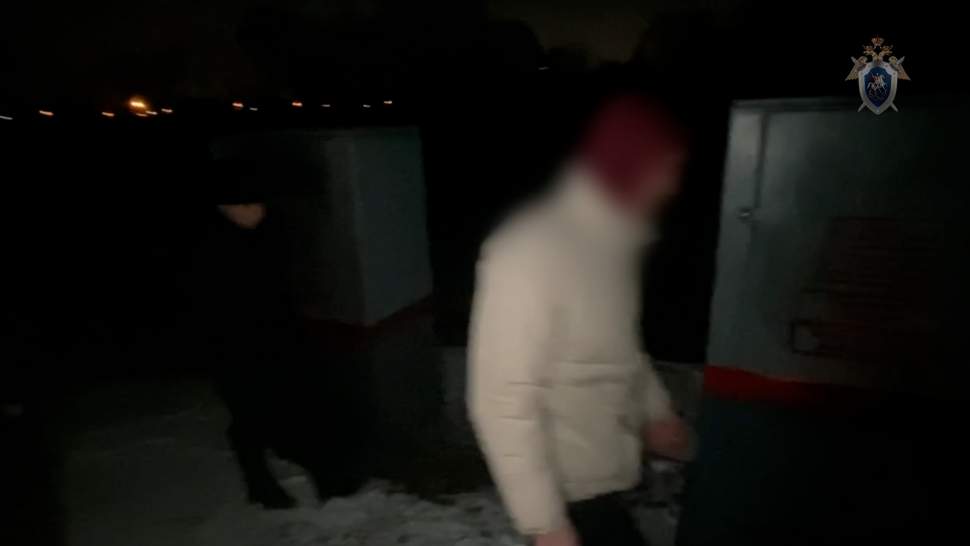
In Belgorod Region, a man was detained who was involved in recruiting teenagers for activities on the railway. According to the investigation, in February 2025, the main suspect persuaded a 17-year-old acquaintance to participate in a crime, who then involved a 15-year-old teenager. The young people had previously assigned roles and on February 6 set fire to relay and battery cabinets, two entrance signals and a rail lubricator, damaging transport infrastructure objects.
Georgia
Georgia is a country in the Caucasus region of Eurasia, with a rich history dating back to ancient kingdoms like Colchis and Iberia. It is renowned for its unique alphabet, which originated in the 5th century, and its deep-rooted tradition of winemaking, considered among the oldest in the world. Culturally significant sites include its medieval churches and monasteries, such as those in the historical region of Kartli, which reflect its long-standing Christian heritage.
Russian Volunteer Corps
I am unable to provide a summary of the “Russian Volunteer Corps” as a cultural site or place, as it is not one. It is a paramilitary group of Russian citizens fighting on the side of Ukraine against Russian forces. This group is a contemporary military formation and not a historical or cultural landmark.
Belgorod Region
The Belgorod Region is a southwestern federal subject of Russia, bordering Ukraine. Historically, its territory was part of the Slavic frontier and the site of the Battle of Kursk, one of the largest tank battles in history during World War II. Today, it is a major agricultural and mining center, known for its vast iron ore deposits.
railway
Railways emerged during the Industrial Revolution, with the first public steam-powered lines opening in early 19th-century Britain. This innovation revolutionized transportation, enabling the rapid movement of people and goods over long distances and fueling industrial and economic growth worldwide. Today, railway networks remain a vital part of global infrastructure, connecting cities and countries.
relay cabinets
Relay cabinets are utilitarian metal enclosures housing telecommunications equipment, historically used to manage and amplify analog signals along telephone lines. They emerged prominently in the mid-20th century as part of expanding landline networks, often placed curbside to connect individual buildings to central exchanges. While largely replaced by digital systems and fiber optics, these cabinets remain visible in many cities as remnants of earlier communication infrastructure.
battery cabinets
Battery cabinets are industrial enclosures used to safely house and organize large-scale battery systems, such as those for backup power or renewable energy storage. They emerged with the widespread adoption of lead-acid and later lithium-ion batteries to protect the equipment and ensure operational safety. While they are functional infrastructure rather than a cultural site, their history is tied to the evolution of electrical grid technology and the growing demand for energy storage solutions.
entrance signals
“Entrance signals” are not a specific place or cultural site, but rather a general concept referring to the architectural or landscape features that mark the transition into a significant area. Historically, these have taken many forms, from grand gates and arches in ancient cities to symbolic bridges or pathways in sacred sites like temples or gardens. Their purpose is to psychologically and physically prepare a visitor for the experience that lies beyond the threshold.
rail lubricator
A rail lubricator is a mechanical device installed along railway tracks to apply lubricant to train wheels or rails, reducing friction and wear. First developed in the late 19th century, these systems became essential for prolonging the lifespan of both rails and wheels, particularly on sharp curves where friction is greatest. Modern versions are often automated, using sensors to activate lubrication only when trains pass.